
Biology_A-level_Cie
-
1-1-the-microscope-in-cell-studies5 主题
-
1-2-cells-as-the-basic-units-of-living-organisms5 主题
-
2-1-testing-for-biological-molecules3 主题
-
2-2-carbohydrates-and-lipids8 主题
-
2-3-proteins6 主题
-
2-4-water2 主题
-
3-1-mode-of-action-of-enzymes5 主题
-
3-2-factors-that-affect-enzyme-action8 主题
-
4-1-fluid-mosaic-membranes4 主题
-
4-2-movement-into-and-out-of-cells12 主题
-
diffusion
-
osmosis
-
active-transport
-
endocytosis-and-exocytosis
-
investigating-transport-processes-in-plants
-
investigating-diffusion
-
surface-area-to-volume-ratios
-
investigating-surface-area
-
estimating-water-potential-in-plants
-
osmosis-in-plant-cells
-
osmosis-in-animals
-
comparing-osmosis-in-plants-and-animals
-
diffusion
-
5-1-replication-and-division-of-nuclei-and-cells6 主题
-
5-2-chromosome-behaviour-in-mitosis2 主题
-
6-1-structure-of-nucleic-acids-and-replication-of-dna4 主题
-
6-2-protein-synthesis5 主题
-
7-1-structure-of-transport-tissues4 主题
-
7-2-transport-mechanisms7 主题
-
8-1-the-circulatory-system7 主题
-
8-2-transport-of-oxygen-and-carbon-dioxide5 主题
-
8-3-the-heart4 主题
-
9-1-the-gas-exchange-system6 主题
-
10-1-infectious-diseases3 主题
-
10-2-antibiotics3 主题
-
11-1-the-immune-system4 主题
-
11-2-antibodies-and-vaccination6 主题
-
12-1-energy5 主题
-
12-2-respiration11 主题
-
aerobic-respiration-the-krebs-cycle
-
aerobic-respiration-role-of-nad-and-fad
-
aerobic-respiration-oxidative-phosphorylation
-
anaerobic-respiration
-
energy-yield-aerobic-and-anaerobic-respiration
-
anaerobic-adaptation-of-rice
-
aerobic-respiration-effect-of-temperature-and-substrate-concentration
-
structure-and-function-of-mitochondria
-
the-four-stages-in-aerobic-respiration
-
aerobic-respiration-glycolysis
-
aerobic-respiration-the-link-reaction
-
aerobic-respiration-the-krebs-cycle
-
13-1-photosynthesis-as-an-energy-transfer-process8 主题
-
13-2-investigation-of-limiting-factors2 主题
-
14-1-homeostasis-in-mammals8 主题
-
14-2-homeostasis-in-plants3 主题
-
15-1-control-and-coordination-in-mammals12 主题
-
the-endocrine-system
-
the-nervous-system
-
neurones
-
sensory-receptor-cells
-
sequence-of-events-resulting-in-an-action-potential
-
transmission-of-nerve-impulses
-
speed-of-conduction-of-impulses
-
the-refractory-period
-
cholinergic-synapses
-
stimulating-contraction-in-striated-muscle
-
ultrastructure-of-striated-muscle
-
sliding-filament-model-of-muscular-contraction
-
the-endocrine-system
-
15-2-control-and-coordination-in-plants3 主题
-
16-1-passage-of-information-from-parents-to-offspring5 主题
-
16-2-the-roles-of-genes-in-determining-the-phenotype7 主题
-
16-3-gene-control3 主题
-
17-1-variation4 主题
-
17-2-natural-and-artificial-selection7 主题
-
17-3-evolution2 主题
-
18-1-classification5 主题
-
18-2-biodiversity7 主题
-
18-3-conservation6 主题
-
19-1-principles-of-genetic-technology11 主题
-
19-2-genetic-technology-applied-to-medicine4 主题
-
19-3-genetically-modified-organisms-in-agriculture2 主题
-
1-1-the-microscope-in-cell-studies
-
1-2-cells-as-the-basic-units-of-living-organisms
-
2-1-testing-for-biological-molecules
-
2-2-carbohydrates-and-lipids
-
2-3-proteins
-
2-4-water
-
3-1-mode-of-action-of-enzymes
-
3-2-factors-that-affect-enzyme-action
-
4-1-fluid-mosaic-membranes
-
4-2-movement-into-and-out-of-cells
-
5-1-replication-and-division-of-nuclei-and-cells
-
5-2-chromosome-behaviour-in-mitosis
-
6-1-structure-of-nucleic-acids-and-replication-of-dna
-
6-2-protein-synthesis
-
7-1-structure-of-transport-tissues
-
7-2-transport-mechanisms
-
8-1-the-circulatory-system
-
8-2-transport-of-oxygen-and-carbon-dioxide
-
8-3-the-heart
-
9-1-the-gas-exchange-system
-
10-1-infectious-diseases
-
10-2-antibiotics
-
11-1-the-immune-system
-
11-2-antibodies-and-vaccination
prevention-and-control-of-disease
Factors for prevention & control of common diseases
Prevention and control of cholera
-
Cholera occurs when people do not have access to effective sanitation facilities and access to clean water
-
It is difficult to prevent and control cholera in developing countries
-
The fast-growing cities in developing countries may not have the appropriate infrastructure, and may have limited funds for large-scale projects such as the provision of drainage systems, sewage treatment facilities and clean water supplies
-
Humanitarian crises, e.g. displacement of people due to wars or natural disasters, can cause the destruction of sanitation infrastructure and/or the provision of poor sanitation facilities in overcrowded temporary housing
-
In some developing countries the use of raw human sewage to irrigate crops is common
-
-
Prevention of cholera can occur through:
-
Providing adequate sewage treatment infrastructure
-
The provision of clean, piped water that has been chlorinated to kill bacteria
-
This strategy means that cholera is very rare in developed countries
-
-
Vaccination programmes in areas where cholera is common
-
-
Cholera can be controlled by:
-
Ready access to treatments such as oral rehydration therapy; a solution containing glucose, salts and water
-
Monitoring programmes by the World Health Organisation (WHO)
-
Using antibiotics in severe cases
-
Prevention and control of malaria
-
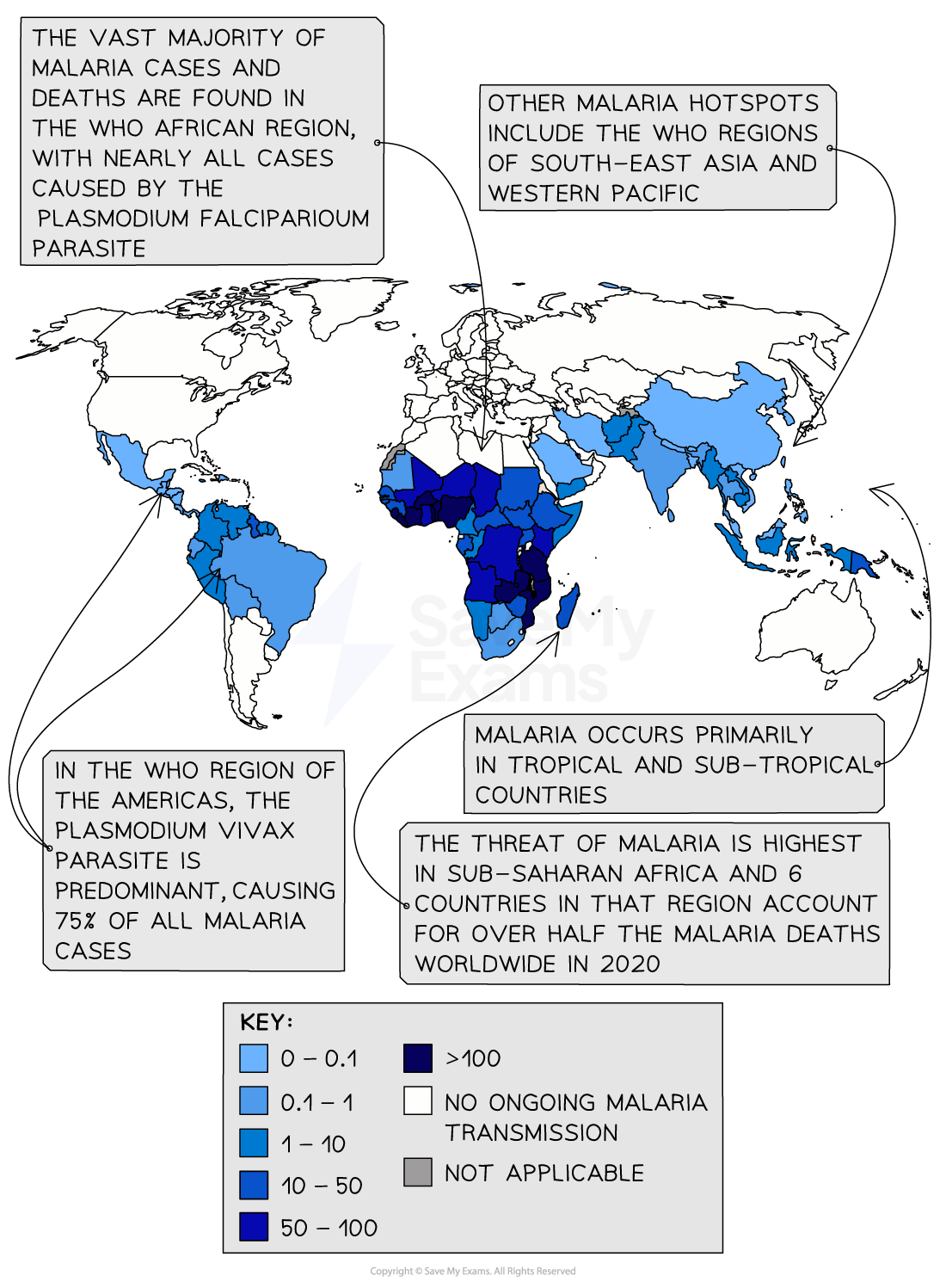
Malaria spreads in regions where Anopheles mosquitos can breed; this is dependent on a warm climate, and the availability of standing water
-
The 3 main methods for reducing malaria are:
-
Reducing the number of Anopheles mosquitoes in an area
-
Spraying living areas with insecticides
-
Spreading oil over the surface of water bodies in which mosquitoes breed
-
Draining marshes and other unnecessary bodies of water
-
Ensuring ponds and irrigation or drainage ditches are stocked with fish that feed on mosquito larvae
-
Unfortunately, mosquitoes lay eggs in even very small puddles and pools of water and therefore it is practically impossible to control all breeding sites using the methods listed above
-
-
Reducing the chance of being bitten by these mosquitoes
-
People in malarial zones should sleep under bed nets, which can also be soaked periodically in insecticide to increase effectiveness,
-
People should avoid exposing their skin at dusk when mosquitoes are most active
-
-
Using drugs to prevent Plasmodium infecting humans
-
Drugs, such as chloroquine and mefloquine, are taken before, during and after a visit to a location where malaria is prevalent.
-
The use of these drugs has resulted in drug-resistant strains of Plasmodium
-
The drugs are expensive and can have disagreeable side-effects
-
-
-
In the 1950s, the World Health Organisation (WHO) coordinated a worldwide eradication programme; whilst malaria was eradicated from some countries, the programme was mainly unsuccessful because:
-
Plasmodium became resistant to the drugs being used to try and control it
-
Anopheles mosquitoes became resistant to DDT and other insecticides being used against them
-
-
To control malaria, governments, the WHO and other institutions are focusing on:
-
Working within health systems to improve diagnosis
-
Improving the supply of effective drugs
-
Using drugs in combination to reduce drug resistance
-
Promoting appropriate methods to prevent transmission, e.g. the use of biological controls to target the larvae and insecticide-treated bednets
-
-
Recent scientific advances regarding the control of malaria are:
-
Simple dipstick tests for diagnosing malaria – this means a diagnosis can be made much faster and does not require a laboratory
-
The entire Plasmodium genome has been sequenced
-
The approval of two effective malaria vaccines which have been decades in development; these can now be rolled out in affected areas
-
Prevention and control of tuberculosis (TB)
-
TB is spread from person to person when droplets released by the coughing or sneezing of an infected person are inhaled by an uninfected person
-
The droplets contain the TB-causing bacterium Mycobacterium tuberculosis
-
-
The spread of TB increases in overcrowded living conditions, so is prevalent among poorer people with inadequate housing conditions
-
Contact tracing, and the subsequent testing of those contacts for the bacterium, is an important part of controlling the spread of TB
-
Prevention of TB occurs through the use of the BCG vaccine
-
The vaccine protects up to 70-80% of those who receive it, although its effectiveness decreases with age
-
-
The form of TB that can be transmitted between cattle and humans (caused by Mycobacterium bovis) can be prevented by:
-
Routinely testing cattle for TB and destroying those that test positive
-
Pasteurising milk; this kills any TB-causing bacteria present in the milk
-
Ensuring that meat is cooked properly
-
Prevention and control of HIV/AIDS
-
HIV is spread when body fluids are exchanged between an infected and an uninfected individual
-
Preventing the spread of HIV is very difficult as the virus has a long latent stage, which results in it being transmitted by people who have the virus but show no symptoms, and so may not know they are infected
-
This occurs because the virus can change its surface proteins, making it difficult for the human immune system to recognise it and for a vaccine to be developed
-
-
To prevent the transmission of HIV the following measures can be implemented:
-
Blood donations can be screened for HIV and heat-treated to kill any viruses
-
HIV-positive mothers and their babies can be treated with drugs
-
Condoms, femidoms and dental dams can be used to decrease the infection risk during sexual intercourse and oral sex by forming a physical barrier between body and fluids
-
Education programmes about how the virus is transmitted can be released into the community to encourage people to have HIV tests and to avoid unprotected sex
-
Intravenous drug users encouraged not to share needles
-
-
Controlling HIV can occur by:
-
Contact tracing (and the subsequent testing of those contacts for the virus)
-
Screening blood donations
-
Public health measures, such as widespread HIV testing of the population and education programmes
-
Needle-exchange schemes have been set up in some places to exchange used needles for new, sterile ones
-
Encouraging individuals to be tested for HIV
-
Using anti-retroviral drugs
-
-
The socio-economic status of a person or country with HIV can determine how it is controlled
-
For example, HIV-positive mothers are advised not to breastfeed in high-income countries, however, in low- and middle-income countries breastfeeding is more affordable, and offers protection against other diseases, e.g. cholera
-