
Biology_A-level_Aqa
-
1-biological-molecules
1-1-biological-molecules-carbohydrates11 主题-
1-1-1-biological-molecules-key-terms
-
1-1-2-biological-molecules-reactions
-
1-1-3-monosaccharides
-
1-1-4-glucose
-
1-1-5-the-glycosidic-bond
-
1-1-6-chromatography-monosaccharides
-
1-1-7-disaccharides
-
1-1-8-starch-and-glycogen
-
1-1-9-cellulose
-
1-1-10-biochemical-tests-sugars-and-starch
-
1-1-11-finding-the-concentration-of-glucose
-
1-1-1-biological-molecules-key-terms
-
1-2-biological-molecules-lipids3 主题
-
1-3-biological-molecules-proteins5 主题
-
1-4-proteins-enzymes12 主题
-
1-4-1-many-proteins-are-enzymes
-
1-4-2-enzyme-specificity
-
1-4-3-how-enzymes-work
-
1-4-4-required-practical-measuring-enzyme-activity
-
1-4-5-drawing-a-graph-for-enzyme-rate-experiments
-
1-4-6-using-a-tangent-to-find-initial-rate-of-reaction
-
1-4-7-limiting-factors-affecting-enzymes-temperature
-
1-4-8-limiting-factors-affecting-enzymes-ph
-
1-4-10-limiting-factors-affecting-enzymes-enzyme-concentration
-
1-4-11-limiting-factors-affecting-enzymes-substrate-concentration
-
1-4-12-limiting-factors-affecting-enzymes-inhibitors
-
1-4-14-control-of-variables-and-uncertainty
-
1-4-1-many-proteins-are-enzymes
-
1-5-nucleic-acids-structure-and-dna-replication8 主题
-
1-5-2-nucleotide-structure-and-the-phosphodiester-bond
-
1-5-3-dna-structure-and-function
-
1-5-4-rna-structure-and-function
-
1-5-5-ribosomes
-
1-5-6-the-origins-of-research-on-the-genetic-code
-
1-5-8-the-process-of-semi-conservative-replication
-
1-5-9-calculating-the-frequency-of-nucleotide-bases
-
1-5-10-the-watson-crick-model
-
1-5-2-nucleotide-structure-and-the-phosphodiester-bond
-
1-6-atp-water-and-inorganic-ions4 主题
-
2-cell-structure2-1-cell-structure7 主题
-
2-2-the-microscope-in-cell-studies4 主题
-
2-3-cell-division-in-eukaryotic-and-prokaryotic-cells8 主题
-
2-4-cell-membranes-and-transport7 主题
-
2-5-cell-recognition-and-the-immune-system7 主题
-
2-6-vaccines-disease-and-monoclonal-antibodies6 主题
-
3-exchange-and-transport3-1-adaptations-for-gas-exchange6 主题
-
3-2-human-gas-exchange10 主题
-
3-2-1-the-human-gas-exchange-system
-
3-2-2-dissecting-the-gas-exchange-system
-
3-2-3-microscopy-and-gas-exchange-surfaces
-
3-2-4-investigating-gas-exchange
-
3-2-5-the-alveolar-epithelium
-
3-2-6-ventilation-and-gas-exchange
-
3-2-8-the-effects-of-lung-disease
-
3-2-9-pollution-and-smoking-data
-
3-2-10-risk-factor-data
-
3-2-11-correlations-and-causal-relationships
-
3-2-1-the-human-gas-exchange-system
-
3-3-digestion-and-absorption5 主题
-
3-4-mass-transport-in-animals6 主题
-
3-5-the-circulatory-system-in-animals8 主题
-
3-6-mass-transport-in-plants6 主题
-
4-genetics-variation-and-interdependence4-1-dna-genes-and-chromosomes7 主题
-
4-2-dna-and-protein-synthesis6 主题
-
4-3-genetic-diversity-mutations-and-meiosis7 主题
-
4-4-genetic-diversity-and-adaptation6 主题
-
4-5-species-and-taxonomy4 主题
-
4-6-biodiversity9 主题
-
5-energy-transfers-in-and-between-organisms-a-level-only5-1-photosynthesis-a-level-only5 主题
-
5-2-respiration-a-level-only7 主题
-
5-3-energy-and-ecosystems-a-level-only9 主题
-
5-4-nutrient-cycles-a-level-only4 主题
-
6-organisms-respond-to-changes-in-their-environments-a-level-only6-1-response-to-stimuli-a-level-only12 主题
-
6-1-1-survival-and-response
-
6-1-2-growth-factors-in-flowering-plants
-
6-1-3-indoleacetic-acid-iaa
-
6-1-4-taxes-and-kinesis
-
6-1-5-reflex-arcs
-
6-1-6-required-practical-investigating-animal-movement
-
6-1-7-the-pacinian-corpuscle
-
6-1-8-pacinian-corpuscles-generator-potential
-
6-1-9-investigating-touch-and-temperature-receptors
-
6-1-10-the-human-retina
-
6-1-11-myogenic-stimulation-of-the-heart
-
6-1-13-heart-rate
-
6-1-1-survival-and-response
-
6-2-nervous-coordination-a-level-only10 主题
-
6-3-skeletal-muscles-a-level-only6 主题
-
6-4-homeostasis-a-level-only11 主题
-
6-4-1-principles-of-homeostasis
-
6-4-2-negative-feedback
-
6-4-3-glucose-concentration-and-insulin
-
6-4-4-glucose-regulation-glucagon
-
6-4-5-glucose-regulation-adrenaline
-
6-4-6-glucose-regulation-the-liver
-
6-4-7-diabetes
-
6-4-8-required-practical-determining-the-concentration-of-glucose-in-urine
-
6-4-9-nephron-structure
-
6-4-10-nephron-function
-
6-4-11-control-of-blood-water-potential
-
6-4-1-principles-of-homeostasis
-
7-genetics-populations-evolution-and-ecosystems-a-level-only7-1-inheritance-a-level-only6 主题
-
7-2-populations-a-level-only3 主题
-
7-3-evolution-a-level-only5 主题
-
7-4-populations-in-ecosystems-a-level-only7 主题
-
8-the-control-of-gene-expression-a-level-only8-1-genetic-mutations-a-level-only2 主题
-
8-2-regulation-of-gene-expression-a-level-only11 主题
-
8-2-1-totipotent-cells
-
8-2-2-stem-cells
-
8-2-3-the-use-of-stem-cells
-
8-2-4-producing-tissue-cultures-of-explants
-
8-2-5-regulation-of-transcription
-
8-2-6-evaluating-data-about-genetic-expression
-
8-2-7-epigenetics
-
8-2-8-epigenetics-and-disease
-
8-2-9-rna-interference
-
8-2-10-two-types-of-tumours
-
8-2-11-tumour-development
-
8-2-1-totipotent-cells
-
8-3-using-genome-projects-a-level-only4 主题
-
8-4-gene-technologies-a-level-only13 主题
-
8-4-1-recombinant-dna-technology
-
8-4-2-producing-fragments-of-dna
-
8-4-3-investigating-the-specificity-of-restriction-enzymes
-
8-4-4-polymerase-chain-reaction
-
8-4-5-culture-of-transformed-host-cells
-
8-4-6-uses-of-recombinant-dna-technology
-
8-4-7-dna-probes-and-dna-hybridisation
-
8-4-8-screening-patients
-
8-4-9-genetic-counselling-and-personalised-medicine
-
8-4-10-variable-number-tandem-repeats
-
8-4-11-gel-electrophoresis
-
8-4-12-genetic-fingerprinting
-
8-4-13-uses-of-genetic-fingerprinting
-
8-4-1-recombinant-dna-technology
-
exam-guidance-and-skillsessay-guidance3 主题
5-1-2-the-light-dependent-reaction
Photosynthesis & the light-dependent reaction
-
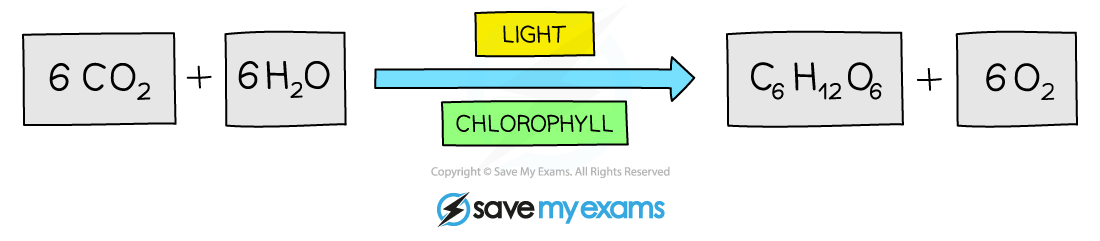
The reactions of photosynthesis convert light energy into stored chemical energy within the carbon compounds of plant tissues
-
Photosynthesis consists of two stages:
-
the light-dependent reaction
-
the light-independent reaction
-
-
All of the reactions of photosynthesis take place within chloroplasts
Chloroplast structure
-
Chloroplasts are surrounded by a double membrane envelope filled with stroma
-
The internal membranes of chloroplasts consist of a series of flattened, fluid-filled sacs known as thylakoids
-
Thylakoids can form stacks known as grana (singular granum)
The light-dependent reaction
-
-
The light-dependent reactions take place on the system of membranes within chloroplasts
-
The membranes create a large surface area to increase the number of light-dependent reactions that can occur
-
The thylakoid membranes contain photosynthetic pigments
-
A series of pigments, e.g. chlorophyll a and chlorophyll b, are arranged in structures known as photosystems
-
The pigments each absorb light at different wavelengths
-

Photoionisation
-
When light energy hits the photosystems in chloroplasts, electrons in the chlorophyll molecule are excited to a higher energy level and are emitted from the chlorophyll molecule; this is photoionisation
-
The excited electrons are passed to a series of electron carrier proteins embedded in the thylakoid membrane
-
The series of proteins together form the electron transport chain
-
Production of ATP and reduced NADP
-
Some of the energy from electrons released during photoionisation is conserved in the production of ATP and reduced NADP (NADPH)
-
ATP is produced on the thylakoid membranes by the process of chemiosmosis
-
The excited electrons pass along the electron transport chain, releasing energy as they do so
-
The electron carriers are alternately reduced as they gain an electron, and oxidised as they lose an electron by passing it to the next carrier
-
-
The released energy is used to pump protons (H+ ions) across the thylakoid membrane, from the stroma to the thylakoid lumen
-
Protons then return to the stroma, down the proton concentration gradient, by facilitated diffusion through ATP synthase enzymes
-
This is chemiosmosis
-
-
ATP synthase catalyses the addition of inorganic phosphate (Pi) to ADP
-
ADP + Pi → ATP
-
This is known as photophosphorylation; the addition of phosphate with light as the energy source
-
-
-
Reduced NADP (NADPH) is produced when hydrogen ions in the stroma and electrons from the electron transport chain combine with NADP
2H+ + 2e– + NADP → NADPH
-
The ATP and reduced NADP then pass to the light-independent reactions
Examiner Tips and Tricks
Note that the process during which protons are pumped across the membrane here is not active transport (as it does not use ATP), so avoid referring to it in this way during exams.
Remember that both ATP and reduced NADP are passed from the light dependent reactions to the Calvin cycle.
Photolysis
-
In addition to photoionisation and the production of ATP and NADPH, light energy is also used to break down water in a reaction known as photolysis
-
Photolysis occurs in the thylakoid lumen
-
H2O → 2H+ + 2e– + ½O2
-
The products of photolysis are used as follows:
-
protons are:
-
pumped across the thylakoid membrane during ATP production
-
joined with NADP and electrons to form NADPH
-
-
electrons are passed to the photosystem to replace those lost during photoionisation
-
oxygen is a waste product that diffuses out of the cells into the leaf air spaces
-

Examiner Tips and Tricks
Be careful not to confuse photoionisation and photolysis:
-
photoionisation = an electron being emitted from chlorophyll
-
photolysis = splitting of water