
Biology AS Edexcel Snab Revision
-
lifestyle-health-and-risk as19 主题
-
diet-and-health interpreting-data-on-risk-factors
-
diet-and-health treatment-of-cvd
-
diet-and-health energy-budgets-and-diet
-
diet-and-health monosaccharides
-
diet-and-health the-glycosidic-bond
-
diet-and-health disaccharides
-
diet-and-health polysaccharides
-
diet-and-health lipids-and-ester-bonds
-
diet-and-health reducing-risk-factors-of-cvd
-
diet-and-health practical-vitamin-c-content
-
the-circulatory-system the-need-for-a-circulatory-system
-
the-circulatory-system the-importance-of-water-in-transport
-
the-circulatory-system mammalian-heart-structure-and-function
-
the-circulatory-system blood-vessels-structure-and-function
-
the-circulatory-system cardiac-cycle
-
the-circulatory-system investigating-heart-rate
-
the-circulatory-system atherosclerosis
-
the-circulatory-system blood-clotting
-
diet-and-health cardiovascular-disease
-
diet-and-health interpreting-data-on-risk-factors
-
genes-and-health as28 主题
-
gas-exchange-cell-membranes-and-transport properties-of-gas-exchange-surfaces
-
gas-exchange-cell-membranes-and-transport ficks-law-of-diffusion
-
gas-exchange-cell-membranes-and-transport the-mammalian-lung
-
gas-exchange-cell-membranes-and-transport cell-membranes
-
gas-exchange-cell-membranes-and-transport practical-investigating-membrane-permeability
-
gas-exchange-cell-membranes-and-transport diffusion-and-facilitated-diffusion
-
gas-exchange-cell-membranes-and-transport active-transport
-
gas-exchange-cell-membranes-and-transport osmosis
-
nucleic-acids nucleotides-and-phosphodiester-bonds
-
nucleic-acids dna-structure
-
nucleic-acids rna-structure
-
proteins transcription
-
proteins translation
-
proteins nature-of-the-genetic-code
-
proteins amino-acids-and-peptide-bonds
-
proteins levels-of-protein-structure
-
proteins globular-proteins-structure-and-function
-
proteins fibrous-proteins-structure-and-function
-
proteins the-role-of-enzymes
-
proteins mode-of-enzyme-action
-
proteins enzyme-and-substrate-concentrations
-
inheritance dna-replication
-
inheritance mutations
-
inheritance inheritance-key-terms
-
inheritance pedigree-diagrams
-
inheritance monohybrid-crosses
-
inheritance chi-squared-test
-
inheritance genetic-screening
-
gas-exchange-cell-membranes-and-transport properties-of-gas-exchange-surfaces
-
voice-of-the-genome as19 主题
-
cell-structure-and-organisation cell-theory
-
cell-structure-and-organisation eukaryotic-cells
-
cell-structure-and-organisation prokaryotic-cells
-
cell-structure-and-organisation organisation-of-cells
-
cell-structure-and-organisation microscopy
-
cell-structure-and-organisation magnification-calculations
-
cell-structure-and-organisation recognising-organelles
-
cell-division the-cell-cycle
-
cell-division mitosis
-
cell-division practical-identifying-mitosis-in-plant-cells
-
reproduction-and-inheritance mammalian-gametes
-
reproduction-and-inheritance fertilisation-in-mammals
-
reproduction-and-inheritance genes-and-linkage
-
reproduction-and-inheritance meiosis-source-of-genetic-variation
-
differentiation-and-variation stem-cells
-
differentiation-and-variation stem-cells-in-medicine
-
differentiation-and-variation cell-differentiation
-
differentiation-and-variation epigenetics
-
differentiation-and-variation phenotypes-and-variation
-
cell-structure-and-organisation cell-theory
-
biodiversity-and-natural-resources as19 主题
-
biodiversity the-variety-of-life
-
biodiversity measuring-biodiversity-within-a-habitat
-
biodiversity comparing-biodiversity-between-habitats
-
biodiversity ecological-niches-and-adaptations
-
biodiversity natural-selection
-
biodiversity hardy-weinberg-equation
-
biodiversity reproductive-isolation
-
biodiversity classification
-
biodiversity conservation-of-biodiversity
-
resources-from-plants plant-cell-structure
-
resources-from-plants plant-stems
-
resources-from-plants importance-of-water-and-inorganic-ions-to-plants
-
resources-from-plants starch-and-cellulose-structure-and-function
-
resources-from-plants plant-fibres
-
resources-from-plants practical-identifying-tissue-types-within-stems
-
resources-from-plants tensile-strength-plant-fibres
-
resources-from-plants development-of-drug-testing
-
resources-from-plants antimicrobial-properties-of-plants
-
resources-from-plants sustainability-and-plant-materials
-
biodiversity the-variety-of-life
proteins fibrous-proteins-structure-and-function
Exam code:8BN0
Fibrous Proteins: Structure & Function
Structure
-
Fibrous proteins are long strands of polypeptide chains that have cross-linkages due to hydrogen bonds
-
These proteins have little or no tertiary structure
-
Fibrous proteins have a limited number of amino acids with the sequence usually being highly repetitive
-
The highly repetitive sequence creates very organised structures
Function
-
Due to a large number of hydrophobic R groups, fibrous proteins are insoluble in water
-
Fibrous proteins are strong and this, along with their insolubility property, makes fibrous proteins very suitable for structural roles
-
Examples of fibrous proteins:
-
Keratin makes up hair, nails, horns and feathers (it is a very tough fibrous protein)
-
Elastin is found in connective tissue, tendons, skin and bone (it can stretch and then return to its original shape)
-
Collagen is a connective tissue found in skin, tendons and ligaments
-
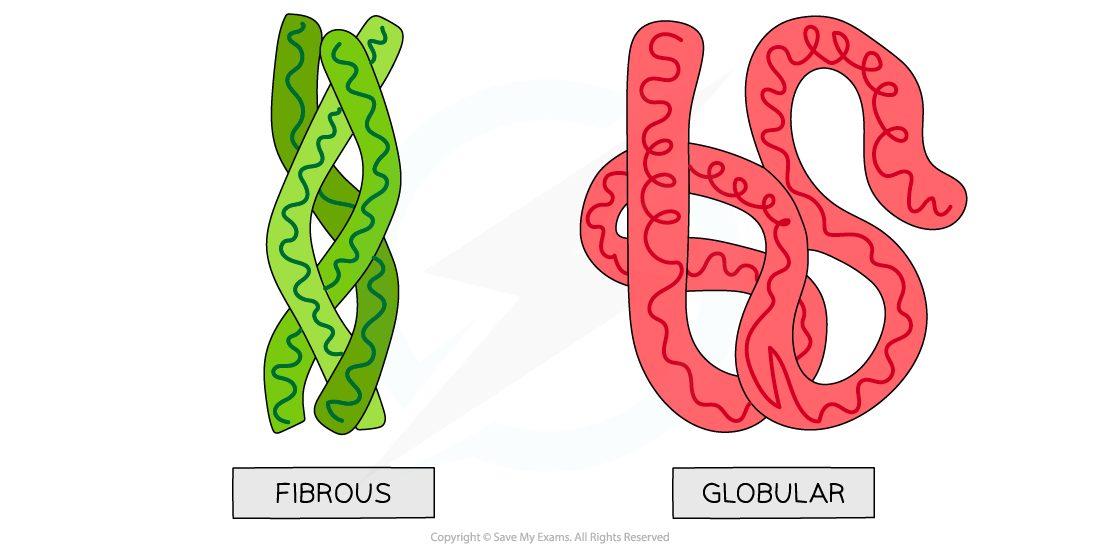
Globular and fibrous protein models illustrating the spherical shape of globular proteins and the long, stranded shape of fibrous proteins.
Collagen
-
Collagen is the most common structural protein found in vertebrates
-
It provides structural support
-
In vertebrates it is the component of connective tissue which forms:
-
Tendons
-
Cartilage
-
Ligaments
-
Bones
-
Teeth
-
Skin
-
Walls of blood vessels
-
Cornea of the eye
-
-
Collagen is an insoluble fibrous protein
Structure of collagen
-
Collagen is formed from three polypeptide chains closely held together by hydrogen bonds to form a triple helix (known as tropocollagen)
-
Each polypeptide chain is a helix shape (but not α-helix as the chain is not as tightly wound) and contains about 1000 amino acids with glycine, proline and hydroxyproline being the most common
-
In the primary structure of collagen almost every third amino acid is glycine
-
This is the smallest amino acid with a R group that contains a single hydrogen atom
-
Glycine tends to be found on the inside of the polypeptide chains allowing the three chains to be arranged closely together forming a tight triple helix structure
-
-
Along with hydrogen bonds forming between the three chains there are also covalent bonds present
-
Covalent bonds also form cross-links between R groups of amino acids in interacting triple helices when they are arranged parallel to each other
-
The cross-links hold the collagen molecules together to form fibrils
-
-
The collagen molecules are positioned in the fibrils so that there are staggered ends (this gives the striated effect seen in electron micrographs)
-
When many fibrils are arranged together they form collagen fibres
-
Collagen fibres are positioned so that they are lined up with the forces they are withstanding
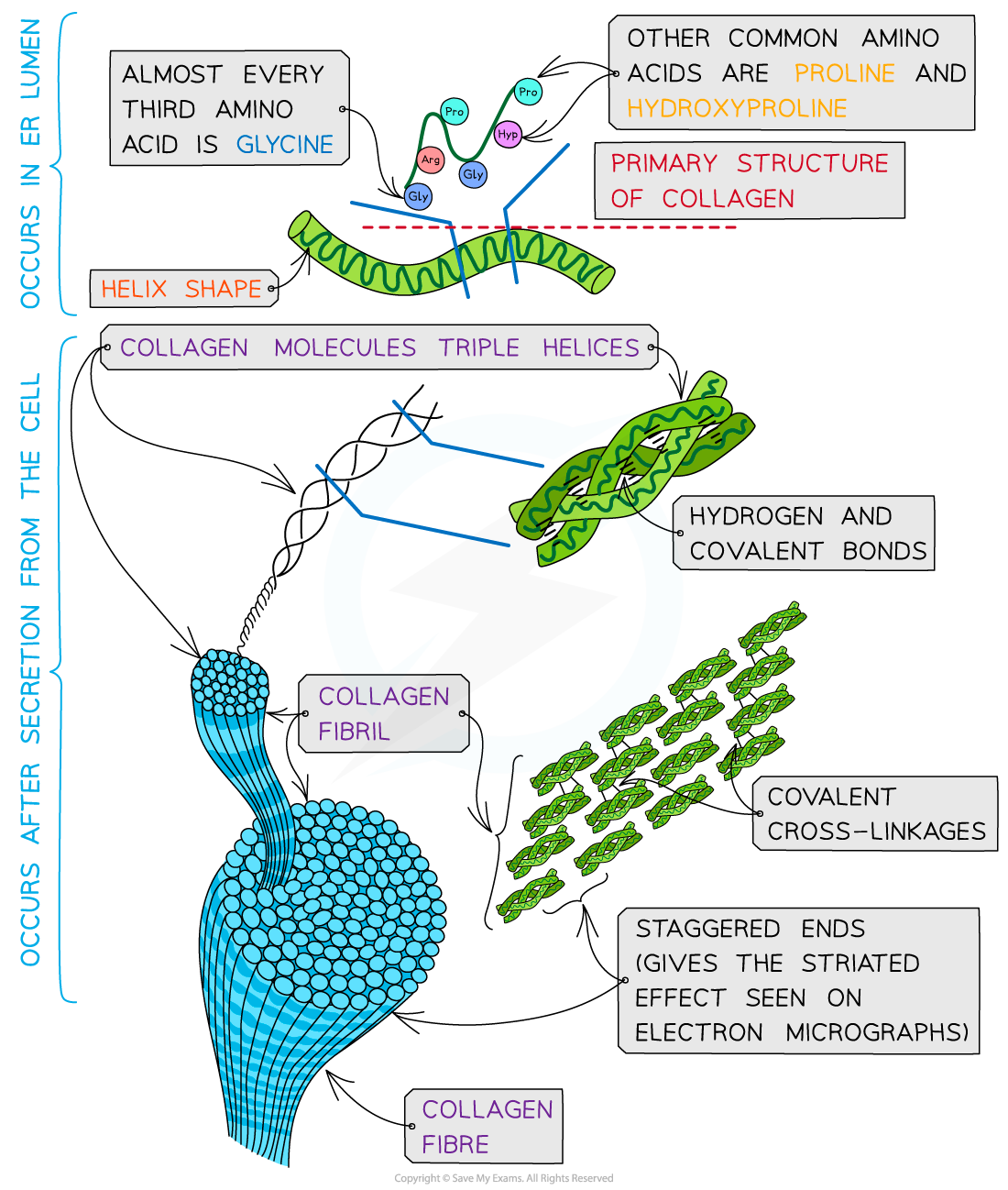
Collagen is a fibrous structural protein that is formed by triple helices. Collagen molecules arrange into collagen fibrils and finally into collagen fibres which have high tensile strength
Function of collagen
-
Collagen is a flexible structural protein forming connective tissues
-
The presence of the many hydrogen bonds within the triple helix structure of collagen results in great tensile strength. This enables collagen to be able to withstand large pulling forces without stretching or breaking
-
The staggered ends of the collagen molecules within the fibrils provide strength
-
Collagen is a stable protein due to the high proportion of proline and hydroxyproline amino acids present. These amino acids increase stability as their R groups repel each other
-
The length of collagen molecules means they take too long to dissolve in water (making it insoluble in water)
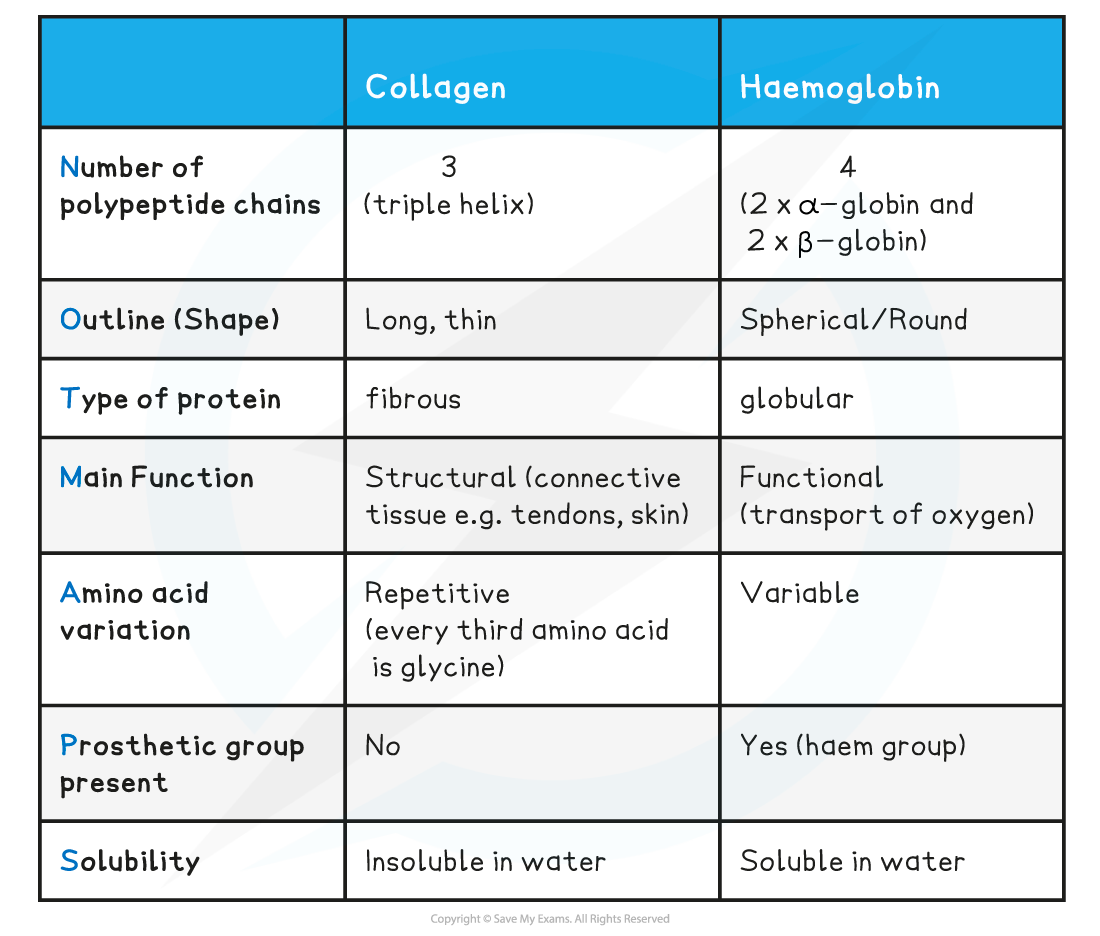
Comparison of Collagen and Haemoglobin Table
Responses