
Exam code:9609
Different types of training
-
Businesses need to make sure that new and existing staff are trained and developed appropriately
-
Training is the teaching of new skills
-
Development is the improvement of existing skills
-
1. Induction training
-
Induction training is a type of training that new employees receive when they start working for a business
Components of induction training

-
Induction trtaining introduces employees to the business, its culture, policies, procedures, and their job roles and responsibilities
-
E.g.New employees at Marks & Spencer receive induction training that covers customer service, product knowledge, store policies and safety procedures
-
Evaluating induction training
|
Advantages |
Disadvantages |
|---|---|
|
|
2. On the job training
-
A type of training that takes place while employees are working in their job roles
-
Employees learn new skills and knowledge from colleagues while performing their job duties
-
E.g. A sous chef at The Ivy Restaurant in York may receive on-the-job training from the Chef to learn how to prepare new dishes, use new equipment, or improve their cooking techniques
-
Evaluating on the job training
|
Advantages |
Disadvantages |
|---|---|
|
|
3. Off the job training
-
A type of training that takes place outside of the workplace
-
It can be in the form of workshops, seminars, conferences, or online courses
-
E.g. Teachers can attend exam board training days at which they learn how to better teach the syllabus and help their students to prepare for their exams
-
Evaluating off the job training
|
Advantages |
Disadvantages |
|---|---|
|
|
The impact of training and development
-
Effective training can improve employees’ performance, as well as their confidence and motivation in the workplace
Factors affecting the impact of training
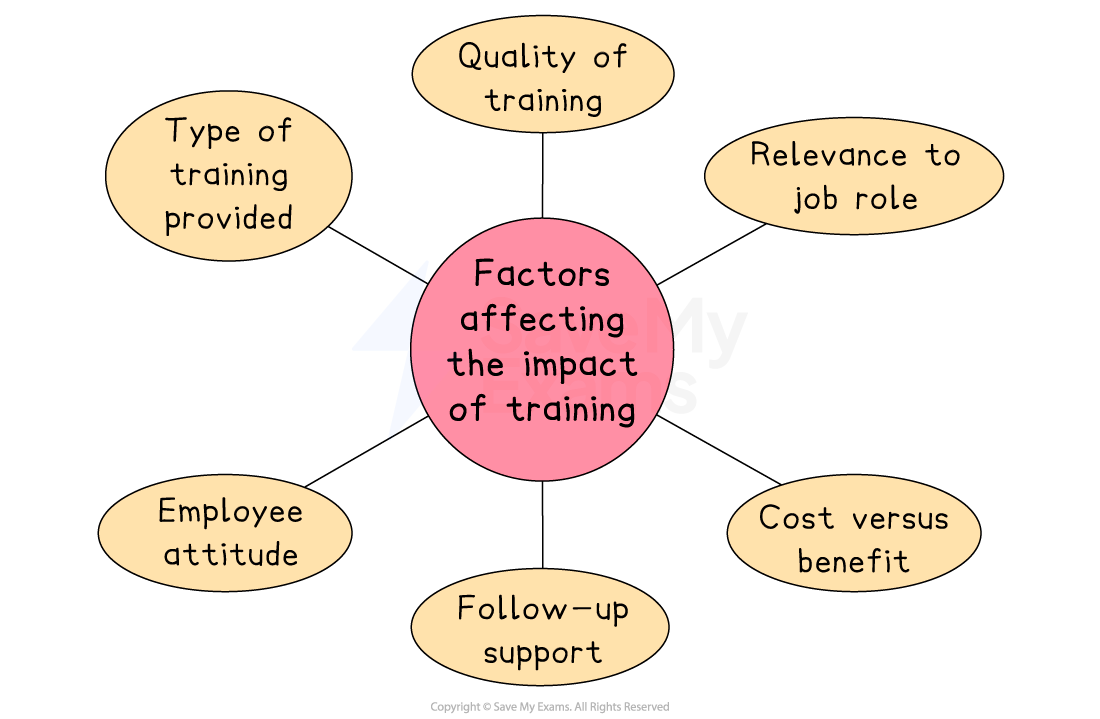
1. Type of training provided
-
On-the-job training is practical and inexpensive, and allows learning in a real work environment
-
However, it may be rushed or poorly structured if the trainer is not experienced, which can reduce how useful the training is
-
-
Off-the-job training is often delivered by professional trainers and may include detailed or specialist content
-
However, it can be costly and time-consuming, and employees are not working during this time, reducing productivity
-
2. Quality of training
-
Training that is well-planned, clearly delivered and engaging helps employees understand and remember the information, and is more likely to improve performance and confidence
-
If the training is badly organised, unclear or not suited to the employee’s needs, it may waste time and money without improving skills or results
3. Relevance to job role
-
Training must be directly linked to the employee’s daily tasks and responsibilities
-
If the training is too general or unrelated, the employee may struggle to apply what they’ve learned to their actual job
-
4. Employee attitude
-
Training works best when employees are willing to learn and see it as an opportunity for personal growth
-
Positive and motivated employees are more likely to engage with training and apply what they learn.
-
If employees are not interested or see training as a waste of time, its impact will be much smaller
-
5. Follow-up support
-
After the initial training, it is important to give employees continued support, such as coaching, mentoring, or feedback
-
This helps them practise new skills and feel confident using them over time
-
-
However, without follow-up, employees may forget what they learnt or not know how to apply it properly in real work situations
6. Cost versus benefit
-
Training often requires money, time, and resources
-
Businesses must decide if the potential benefits, such as higher productivity, better customer service, or lower staff turnover, are worth the cost
-
-
Well-targeted training that leads to noticeable improvements is usually worth the investment
Advantages and disadvantages of training to a business
|
Advantages |
Disadvantages |
|---|---|
|
|
|
|
|
|
|
|
|
|
Employee development to encourage intrapreneurship
-
Intrapreneurship is when employees act like entrepreneurs within a business
-
They take initiative, develop new ideas, and look for better ways to do things while still being employed by the company
-
They help a business grow by driving innovation, improving processes or creating new products
-
Approaches businesses may take to encourage intrapreneurship
|
Approach |
Explanation |
|---|---|
|
Training in creativity and problem-solving |
|
|
Encouraging idea sharing |
|
|
Job rotation and project work |
|
|
Leadership and personal development programmes |
|
|
Creating a culture of trust and experimentation |
|
Employee development to encourage multi-skilling and flexibility
-
Multi-skilling means employees are trained to carry out a variety of tasks, not just one specific job
-
Flexibility means employees can adapt to different roles, work patterns, or changing business needs
-
This might include flexible working hours, remote working or being able to switch between tasks and teams
-
Benefits of multi-skilling and flexibility
-
Reduces reliance on specific individuals
-
When more employees are trained to do the same task, the business can continue running smoothly even if someone is absent
-
This avoids delays and reduces pressure on individual workers
-
E.g. If a chef is off sick, a multi-skilled kitchen assistant who has been trained in cooking can step in and keep a restaurant’s service running
-
-
-
Helps the business respond quickly to changes in demand or workload
-
Flexible and multi-skilled employees can be moved to busier departments or roles when needed
-
This allows the business to handle busy periods or sudden changes without hiring more staff
-
E.g. In a retail store, staff trained in both stocking shelves and working on the tills can be moved to the checkout area during peak shopping hours
-
-
-
Increases employee satisfaction
-
Doing different tasks keeps work engaging and helps employees feel more skilled and confident
-
Varied work can reduce boredom and increase motivation
-
E.g. In a call centre, giving staff the chance to work on different types of calls or help with training new starters can make the job more enjoyable
-
-
-
Improves productivity and efficiency
-
Multi-skilled workers are more useful across the business and can perform several roles
-
This reduces downtime and helps the business run smoothly
-
E.g. Manufacturing employees who can operate different machines ensure production continues even if one area has fewer staff available
-
-
</
Responses