
Biology AS OCR
-
1-1-practical-skills-written-assessment AS7 主题
-
1-2-practical-skills-endorsement-assessment AS16 主题
-
1-2-1-practical-ethical-use-of-organisms as
-
1-2-2-practical-aseptic-techniques as
-
1-2-3-practical-dissection-of-gas-exchange-surfaces-in-fish-and-insects as
-
1-2-4-drawing-cells-from-blood-smears as
-
1-2-5-practical-investigating-biodiversity-using-sampling as
-
1-2-6-practical-data-loggers-and-computer-modelling as
-
1-2-7-practical-investigating-the-rate-of-diffusion as
-
1-2-8-practical-investigating-water-potential as
-
1-2-9-practical-factors-affecting-membrane-structure-and-permeability as
-
1-2-10-biochemical-tests-reducing-sugars-and-starch as
-
1-2-11-biochemical-tests-lipids as
-
1-2-12-biochemical-tests-proteins as
-
1-2-13-chromatography as
-
1-2-14-serial-dilutions as
-
1-2-15-practical-investigating-the-rate-of-transpiration as
-
1-2-16-practical-using-a-light-microscope as
-
1-2-1-practical-ethical-use-of-organisms as
-
2-1-cell-structure AS9 主题
-
2-1-2-using-a-microscope as
-
2-1-3-drawing-cells as
-
2-1-4-magnification-and-resolution as
-
2-1-5-eukaryotic-cells as
-
2-1-6-eukaryotic-cells-under-the-microscope as
-
2-1-7-organelles-and-the-production-of-proteins as
-
2-1-8-the-cytoskeleton as
-
2-1-9-prokaryotic-and-eukaryotic-cells as
-
2-1-1-studying-cells as
-
2-1-2-using-a-microscope as
-
2-2-biological-molecules AS17 主题
-
2-2-1-properties-of-water as
-
2-2-2-monomers-and-polymers as
-
2-2-3-monosaccharides as
-
2-2-4-the-glycosidic-bond as
-
2-2-5-polysaccharides as
-
2-2-6-biochemical-tests-reducing-sugars-and-starch as
-
2-2-7-lipids-and-ester-bonds as
-
2-2-8-lipids-structure-and-function as
-
2-2-9-biochemical-tests-lipids as
-
2-2-10-amino-acids-and-peptide-bonds as
-
2-2-11-protein-structure as
-
2-2-12-globular-proteins as
-
2-2-13-fibrous-proteins as
-
2-2-14-inorganic-ions as
-
2-2-15-biochemical-tests-proteins as
-
2-2-16-finding-the-concentration-of-a-substance as
-
2-2-17-chromatography as
-
2-2-1-properties-of-water as
-
2-3-nucleotides-and-nucleic-acids AS8 主题
-
2-4-enzymes AS9 主题
-
2-4-1-the-role-of-enzymes as
-
2-4-2-enzyme-action as
-
2-4-3-enzyme-activity-ph as
-
2-4-4-enzyme-activity-temperature as
-
2-4-5-enzyme-activity-enzyme-concentration as
-
2-4-6-enzyme-activity-substrate-concentration as
-
2-4-7-enzyme-activity-enzyme-inhibitors as
-
2-4-8-coenzymes-cofactors-and-prosthetic-groups as
-
2-4-9-practical-measuring-enzyme-activity as
-
2-4-1-the-role-of-enzymes as
-
2-5-biological-membranes AS9 主题
-
2-5-1-the-cell-surface-membrane as
-
2-5-2-membrane-structure-and-permeability as
-
2-5-3-diffusion-and-facilitated-diffusion as
-
2-5-4-practical-investigating-the-rate-of-diffusion as
-
2-5-5-active-transport as
-
2-5-6-endocytosis-and-exocytosis as
-
2-5-7-osmosis as
-
2-5-8-osmosis-in-animal-and-plant-cells as
-
2-5-9-practical-investigating-water-potential as
-
2-5-1-the-cell-surface-membrane as
-
2-6-cell-division-cell-diversity-and-cellular-organisation AS11 主题
-
2-6-1-the-cell-cycle as
-
2-6-2-the-stages-of-mitosis as
-
2-6-3-identifying-mitosis-in-plant-cells as
-
2-6-4-the-significance-of-mitosis as
-
2-6-5-the-stages-of-meiosis as
-
2-6-6-the-significance-of-meiosis as
-
2-6-7-specialised-cells as
-
2-6-8-the-organisation-of-cells as
-
2-6-9-stem-cells as
-
2-6-10-stem-cells-in-animals-and-plants as
-
2-6-11-the-use-of-stem-cells as
-
2-6-1-the-cell-cycle as
-
3-1-exchange-surfaces AS7 主题
-
3-2-transport-in-animals AS12 主题
-
3-2-1-the-need-for-transport-systems-in-animals as
-
3-2-2-circulatory-systems as
-
3-2-3-blood-vessels as
-
3-2-4-tissue-fluid as
-
3-2-5-the-mammalian-heart as
-
3-2-6-practical-mammalian-heart-dissection as
-
3-2-7-the-cardiac-cycle as
-
3-2-8-cardiac-output as
-
3-2-9-heart-action-initiation-and-control as
-
3-2-10-electrocardiograms-ecgs as
-
3-2-11-the-role-of-haemoglobin as
-
3-2-12-adult-and-fetal-haemoglobin as
-
3-2-1-the-need-for-transport-systems-in-animals as
-
3-3-transport-in-plants AS11 主题
-
3-3-1-the-need-for-transport-systems-in-plants as
-
3-3-2-the-xylem-and-phloem as
-
3-3-3-the-xylem as
-
3-3-4-the-phloem as
-
3-3-5-transverse-sections-stems-roots-and-leaves as
-
3-3-6-the-process-of-transpiration as
-
3-3-7-transpiration-in-plants as
-
3-3-8-practical-investigating-the-rate-of-transpiration as
-
3-3-9-translocation as
-
3-3-10-the-mass-flow-hypothesis as
-
3-3-11-the-adaptations-of-xerophytic-and-hydrophytic-plants as
-
3-3-1-the-need-for-transport-systems-in-plants as
-
4-1-communicable-diseases-disease-prevention-and-the-immune-system AS16 主题
-
4-1-1-common-pathogens-and-communicable-diseases as
-
4-1-2-transmission-of-communicable-pathogens as
-
4-1-3-plant-defences-against-pathogens as
-
4-1-4-non-specific-immune-responses as
-
4-1-5-phagocytes as
-
4-1-6-blood-cells as
-
4-1-7-the-t-lymphocyte-response as
-
4-1-8-the-b-lymphocyte-response as
-
4-1-9-primary-and-secondary-immune-responses as
-
4-1-10-antibodies as
-
4-1-11-opsonins-agglutinins-and-anti-toxins as
-
4-1-12-types-of-immunity as
-
4-1-13-autoimmune-diseases as
-
4-1-14-principles-of-vaccination as
-
4-1-15-sources-of-medicine as
-
4-1-16-antibiotics as
-
4-1-1-common-pathogens-and-communicable-diseases as
-
4-2-biodiversity AS10 主题
-
4-2-1-biodiversity as
-
4-2-2-sampling-to-determine-biodiversity as
-
4-2-3-practical-investigating-biodiversity-using-sampling as
-
4-2-4-measuring-species-richness-and-species-evenness as
-
4-2-5-simpsons-index as
-
4-2-6-genetic-diversity as
-
4-2-7-factors-affecting-biodiversity as
-
4-2-8-reasons-for-maintaining-biodiversity as
-
4-2-9-methods-of-maintaining-biodiversity as
-
4-2-10-conservation-agreements as
-
4-2-1-biodiversity as
-
4-3-classification-and-evolution AS15 主题
-
4-3-1-classification-of-species as
-
4-3-2-binomial-system as
-
4-3-3-classification-of-the-three-domains as
-
4-3-4-classification-of-the-five-kingdoms as
-
4-3-5-classification-and-phylogeny as
-
4-3-6-evidence-of-evolution as
-
4-3-7-types-of-variation as
-
4-3-8-standard-deviation as
-
4-3-9-variation-t-test-method as
-
4-3-10-variation-t-test-worked-example as
-
4-3-11-spearmans-rank-correlation as
-
4-3-12-adaptation as
-
4-3-13-natural-selection as
-
4-3-14-evolution-of-resistance as
-
4-3-15-consequences-of-resistance as
-
4-3-1-classification-of-species as
4-2-2-sampling-to-determine-biodiversity as
Exam code:H020
Sampling to Determine Biodiversity
-
Measuring biodiversity within an ecosystem can be challenging; in large and complex ecosystems it is simply impossible to find, identify and count every organism
-
For this reason sampling can be used to make an estimate of the biodiversity in an area
-
Sampling involves measuring biodiversity in multiple small areas within a habitat and using this information to represent the habitat as a whole; it can be used to measure:
-
distribution: where organisms live within a habitat
-
abundance: how many organisms are present
-
-
In order to be truly representative a sample must be large enough to eliminate the effects of chance, i.e. missing a species simply because it didn’t happen to occur at the sample sites assessed
-
The more samples are collected, the more likely it is that the data will be representative of the habitat
-
-
Sampling methods can be:
-
random
-
non-random
-
Random sampling
-
In random sampling the sampling sites are selected at random; this avoids bias that might result from a researcher choosing the sites to assess
-
Random sample sites are often selected as follows:
-
a grid system is set up by laying out two long tape measures along the outer edges of a habitat
-
a random number generator is used to generate two random numbers
-
the numbers are used like graph coordinates, and the sample site is placed at the point of intersection
-
-
When a sampling area is reasonably uniform or has no clear pattern of species distribution then random sampling is the best choice

A grid system can be used to select sample sites at random
Non-random sampling
-
Random sampling is not always possible, or may not yield the type of results required; in these situations non-random sampling may be more appropriate
-
There are three main types of non-random sampling:
-
opportunistic sampling
-
Sampling is carried out on the basis of opportunity, e.g. sample sites that can be reached quickly and safely are chosen
-
-
stratified sampling
-
The number of random samples taken within each habitat type is proportional to the area covered by each habitat type
-
E.g. if 10 % of a dense woodland contains grassy clearings then 90 % of the sample locations should have tree cover and 10 % will be in clear areas
-
-
systematic sampling
-
Samples are taken across a habitat with reference to the changes in habitat conditions
-
E.g. sample sites may be taken at:
-
increasing altitude
-
increasing distance from the edge of a woodland
-
increasing distance from the shore line
-
-
Systematic sampling involves the use of transects
-
-
Sampling methods
Quadrat sampling
-
A quadrat is a square frame that is placed within the area to be studied to provide a sample
-
Quadrats are suitable for sampling plants or slow-moving animals
-
Quadrats can be different sizes depending on the species being studied
-
A 1 m² quadrat can be used to study small organisms such as herbaceous plants in a grassland or limpets on a rocky shore
-
A 400 m² quadrat can be used to study large organisms such as trees
-
Quadrats like this will usually be marked out with string rather than a frame!
-
-
-
Quadrats can be placed in a habitat randomly or along a transect
-
Measurements within a quadrat might include:
-
the number of species present
-
the number of individuals of a species present, i.e. species abundance
-
the presence/absence of a species
-
the percentage cover of a species, e.g. for species where it is difficult to determine where one individual ends and another starts
-
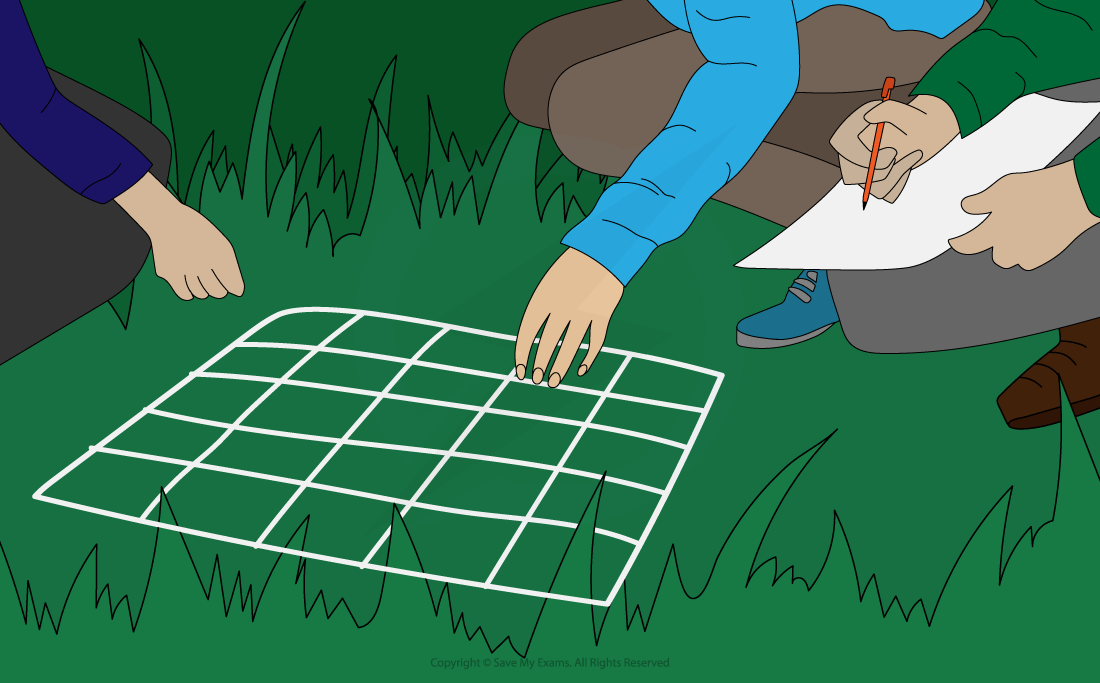
Quadrats are frames that can be used to sample biodiversity
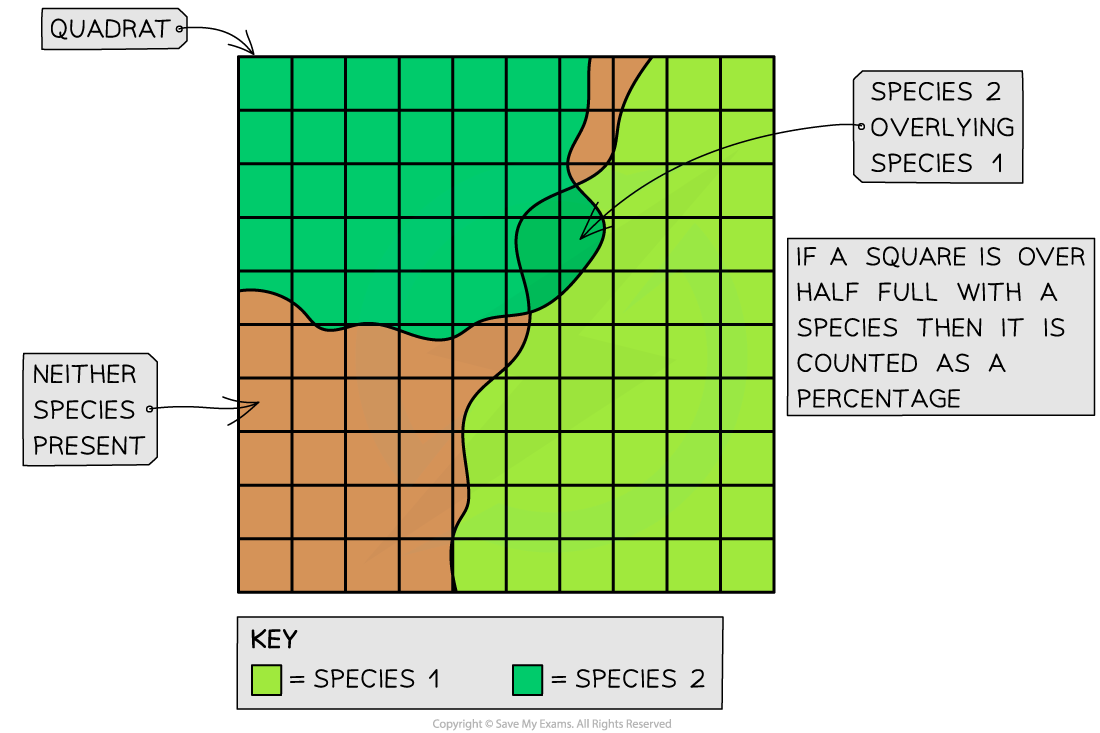
Quadrats can be used to assess percentage cover when it is impossible to count all of the individual organisms
Sweeping nets
-
Sweeping, or sweep, nets are large, strong nets made from a material with very small holes
-
The nets can be swept across vegetation, e.g. grass or tree branches, to catch flying insects and insects that live on leaves
-
After sampling the insects in the net can be counted and identified
Pitfall traps
-
Pitfall traps are cans or jars that are sunk into the ground
-
Ground-dwelling invertebrates fall into the trap as they walk along the ground, and then cannot climb out again
-
A lid ensures that the trap does not fill with rainwater

Pitfall traps are used to sample ground-dwelling invertebrates
Pooters
-
Pooters are small plastic or glass containers with two tubes extending from the lid
-
The tubes can be used to suck up small invertebrates
-
The first tube is placed over the insect and the second tube is used by the scientist to create suction
-
-
Once inside the container the sampled organisms can be easily viewed and identified

Pooters can be used to collect small invertebrates for viewing and identification
Transects
-
A transect is a line along which samples can be taken
-
They are used during systematic sampling to assess how abundance and distribution of organisms is affected by changes in abiotic factors across a habitat
-
Transect lines are laid out across a habitat along the gradient that is to be investigated, e.g.
-
at right angles to the edge of a field
-
vertically up a slope
-
at right angles to a water course
-
-
Types of transect include:
-
line transect:
-
Lay out a measuring tape in a straight line across the sample area
-
At regular distances along the tape, e.g. every 1 m, record the identity of the organisms that touch the line
-
-
belt transect:
-
Lay out a measuring tape in a straight line across the sample area
-
Place quadrats at regular intervals, or continuously, along the tape and record the abundance or percentage cover of each species within each quadrat
-
-
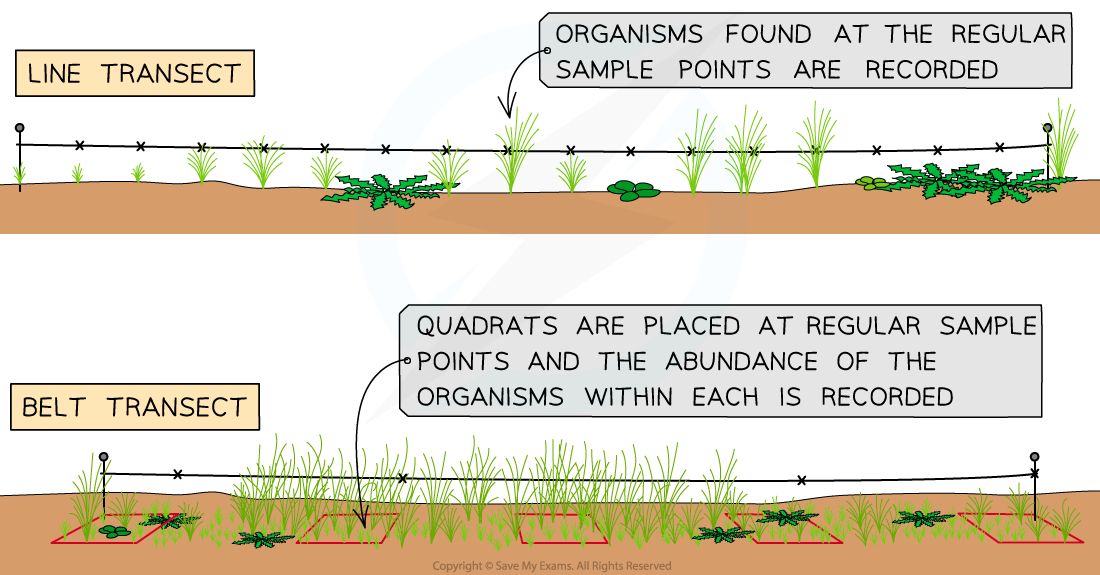
Line and belt transects can be used to assess how the abundance and distribution of species changes across a habitat in response to an abiotic factor
Responses