
Reasons to grow
-
Businesses grow to achieve a range of key objectives
1. Economies of scale
-
Internal economies of scale
-
As a business grows, it can reduce its average costs
-
For example, it may be able to buy supplies in bulk or invest in more efficient machinery
-
-
External economies of scale
-
These are benefits that come from being part of a growing industry, such as better infrastructure or access to a skilled workforce
-
2. Increased market power
-
A larger business may have more control over customers and suppliers
-
It can influence prices or force suppliers to offer better terms, such as longer trade credit periods
3. Increased market share and brand recognition
-
Growth allows a firm to reach more customers and become better known
-
This can lead to higher sales and increased customer loyalty
-
-
Increased brand recognition can help further growth, as customers are familiar with and trust the brand
4. Increased profitability
-
Profitability is a measure of how efficiently a company generates profit relative to its revenue or investment
-
As a firm grows, it may be able to generate more revenue while controlling costs, boosting profitability
-
Explaining economies of scale
-
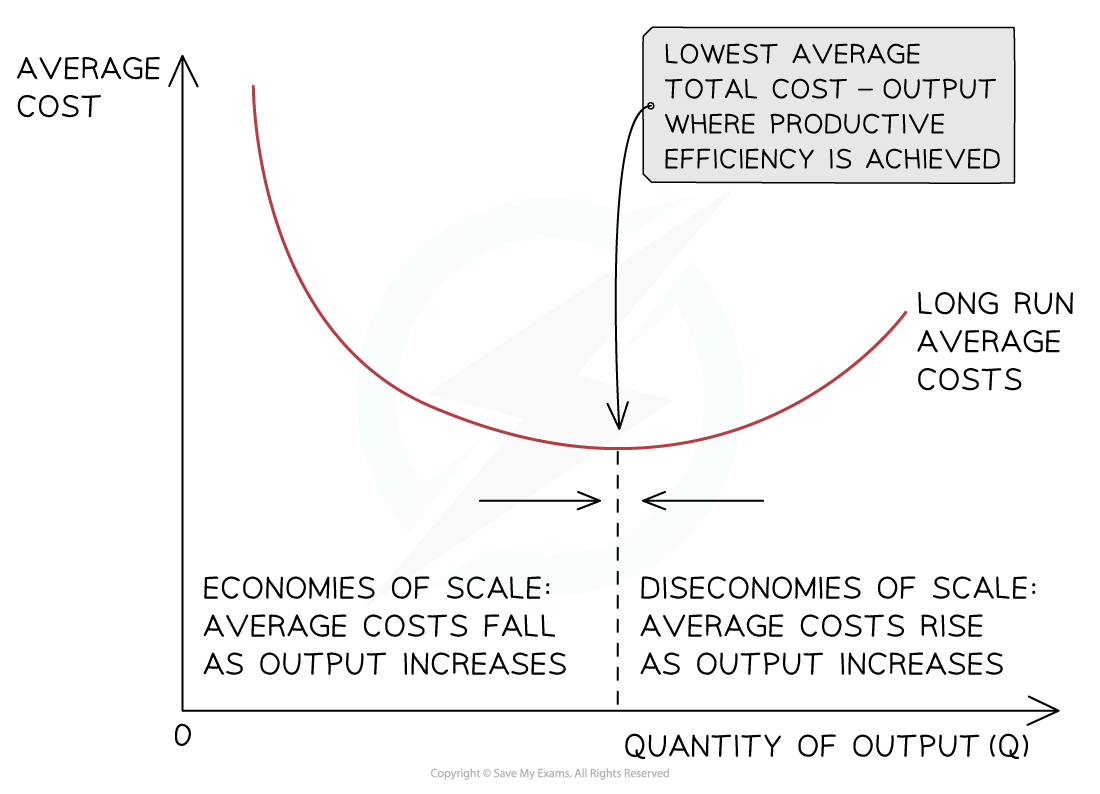
As a business grows, it can increase its scale of output, generating efficiencies that lower its average costs of production
-
These efficiencies are called economies of scale
-
Economies of scale help large firms to lower their costs of production beyond what small firms can achieve
-
-
As a firm continues increasing its scale of output, it will reach a point where its average costs (AC) will start to increase
-
The reasons for the increase in the average costs are called diseconomies of scale
-
-
Internal economies of scale occur as a result of the growth in the scale of production within the firm
Economies of scale
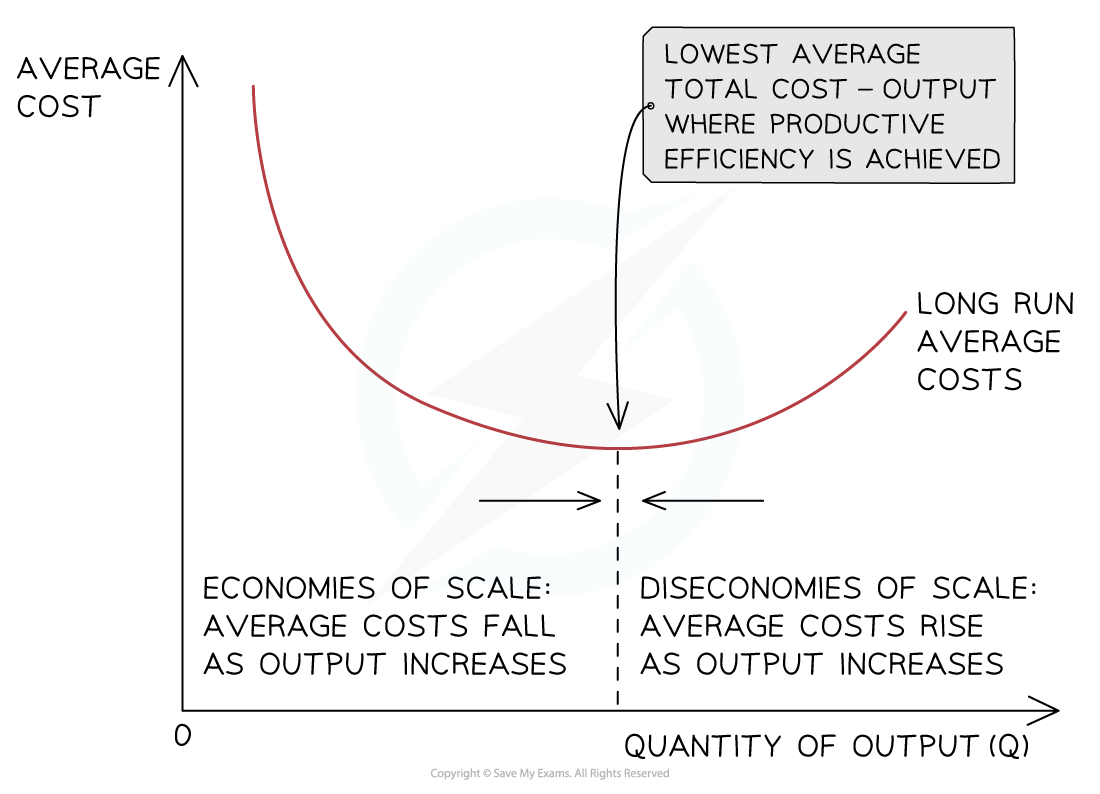
Diagram analysis
-
With relatively low levels of output, average costs are high
-
As the business increases its output, it begins to benefit from economies of scale, which lower the average cost per unit
-
At some level of output, a business will not be able to reduce costs any further — this point is called productive efficiency
-
Beyond this level of output, the average costs will begin to rise as a result of diseconomies of scale
Types of internal and external economies
Internal economies of scale
-
Internal economies of scale occur as a result of the growth in the scale of production within the business
-
The firm can benefit from lower average costs generated by factors that are inside the business
-
Types of internal economies of scale
|
Type |
Explanation |
|---|---|
|
Financial economies |
|
|
Managerial economies |
|
|
Marketing economies |
|
|
Purchasing economies |
|
|
Technical economies |
|
|
Risk-bearing economies |
|
External economies of scale
-
External economies of scale occur when there is an increase in the size of the industry in which the firm operates
-
The firm benefits from lower average costs generated by factors outside of the business
-
Sources of external economies of scale
|
Source |
Explanation |
|---|---|
|
Geographic cluster |
|
|
Transport links |
|
|
Skilled labour |
|
|
Favourable legislation |
|
Problems arising from growth
-
Rapid business growth may create challenges that can negatively impact a company’s operations and financial performance
-
Three of these challenges are diseconomies of scale, internal communication issues and overtrading
1. Diseconomies of scale
-
This occurs when a company grows too large, making it difficult to manage and control its operations
-
It may face challenges in coordinating its various departments, managing its workforce or maintaining quality control
-
The cost per unit ends up increasing as a result of these inefficiencies
2. Internal communication
-
Rapid growth may strain communication channels or result in miscommunication, causing conflicting priorities and a lack of coordination
-
This may result in delays, errors and missed opportunities, as well as impact employee morale
3. Overtrading
-
This occurs when a company takes on more business than it can handle, leading to a strain on its resources or an inability to meet its financial obligations (lack of liquidity)
-
This may cause cash flow problems or decreased customer satisfaction
-
E.g. a company that expands too quickly may struggle to hire and train enough staff to handle increased demand, leading to a backlog of orders and dissatisfied customers
-
Responses