
Product and market orientation
-
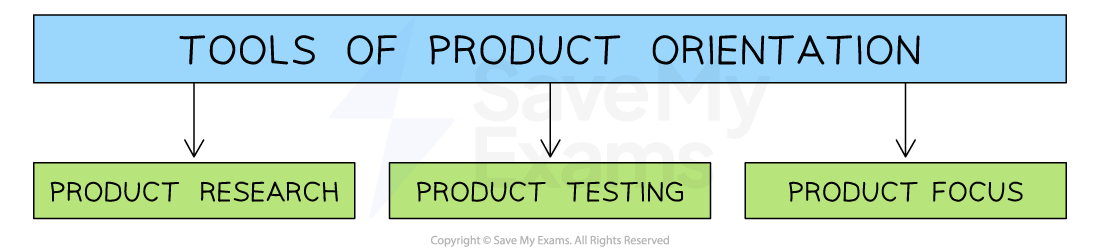
Product orientation is an approach to marketing that focuses on the characteristics of the product rather than the needs of the consumer
-
The emphasis will be on creating a product first and then finding a market
-
The business has a belief that the product is superior; i.e. it will sell itself
-
-
Over time, being too product-oriented means the business may move further and further away from what the market is looking for, thus increasing the risk of business failure
-
E.g. Gillette’s razors can be classified as a product-oriented business, as the business focuses on the quality of its products, and regular innovations aim to increase sales
-
-
-
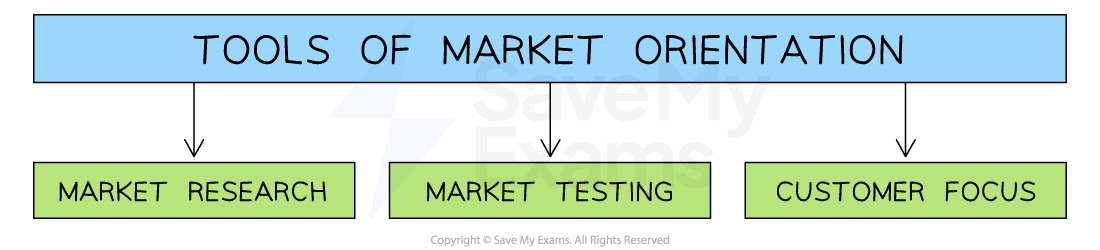
Market orientation is an approach to marketing that focuses on the needs of consumers and uses this information to design products that meet customer needs
-
Consumers are at the centre of marketing decisions
-
Products will be developed that respond to consumer needs
-
The business is likely to benefit from increased demand, increased profits and a valued brand image, as its products are desirable
-
E.g. universities often develop new courses based on the feedback they receive from students and employers
-
-
Primary and secondary market research data
-
Market research is the collection, compilation and analysis of information about a market
-
Effective market research will help the business:
-
Reduce risk when launching new products or entering new markets
-
Anticipate the future needs and wants of consumers
-
Understand consumer behaviour
-
Identify potential consumer demand
-
Identify how much consumers are prepared to pay for a product/service
-
Identify competitors and gauge their potential strengths and weaknesses
-
-
Market research data can be quantitative or qualitative
-
Both forms are useful, and any data analysis should ideally include a combination of the two
-
Primary research
-
Primary research is the process of gathering information directly from consumers in the target market using field research methods, such as surveys, interviews, etc.
-
Primary research gathers information that is new and does not necessarily exist in any format
-
Primary research methods
|
Method |
Explanation |
|---|---|
|
Surveys |
|
|
Observation |
|
|
Interviews |
|
|
Test marketing |
|
|
Focus groups |
|
Advantages and disadvantages of primary market research
|
Advantages |
Disadvantages |
|---|---|
|
|
|
|
|
|
Secondary research
-
Secondary research involves the collection, compilation and analysis of data that already exists
-
Typical methods include purchasing market reports from specialist companies or accessing government statistical portals that provide useful information
-
Advantages and disadvantages of secondary market research
|
Advantages |
Disadvantages |
|---|---|
|
|
|
|
|
|
Using ICT to support market research
-
ICT refers to information and communications technology
-
It can be used to support market research in the following ways:
Company websites
-
Websites allow businesses to collect primary data cheaply, such as tracking consumer searches and analysing customer reviews, as well as collecting secondary data about rivals, e.g. prices and special offers
-
Pop-ups used on websites can also be an effective way of gathering information
Databases
-
These can be used to store large amounts of customer information, e.g. Tesco loyalty cards
-
Databases are also effective in collating customer email addresses so that targeted customers can be surveyed later via email
Social networking
-
This focuses on gathering information about consumers via online social channels, such as Twitter and Facebook
-
It is also useful as a method of running quick polls and surveys or tracking opinions about brands
Market segmentation
-
Market segmentation is the process by which a single market is divided into submarkets, or segments
-
Each segment represents a slightly different set of consumer characteristics
-
Firms often segment their markets according to factors such as income, geographical location, religion, gender and/or lifestyle
-
-
A market for a good such as crisps is not simply seen as one market; i.e. the crisp market is divided into many market segments, such as:
-
Dinner party snacks (Walkers Sensations, Pringles, Burts) with a premium price are targeted at middle to upper earners/professionals
-
Health-conscious crisps (Walker’s Lite, Walkers Baked, Ryvita Lite) are targeted at the health-conscious market
-
Lunch box value snacks (multipacks, Hula Hoops) are targeted at families and the mass market
-
Advantages and disadvantages of market segmentation
|
Advantages |
Disadvantages |
|---|---|
|
|
|
|
|
|
|
|
Responses