
The difference between ‘hard’ and ‘soft’ HRM
-
Businesses use different approaches to meet their HR objectives. These are typically grouped into soft and hard human resource management (HRM) strategies:
-
Soft HRM
-
Focuses on employees as valuable long-term assets
-
Emphasises motivation, engagement, and development
-
Often linked to higher staff retention and job satisfaction
-
E.g. The John Lewis Partnership applies soft HRM by giving employees a stake in the company and a voice in key decisions
-
-
-
Hard HRM
-
Treats employees more like a resource to control and minimise costs
-
Focuses on efficiency, short-term contracts, and minimal employee involvement
-
Often linked to lower labour costs but higher labour turnover
-
E.g. Sports Direct has been criticised for using zero-hour contracts, a hallmark of hard HRM
-
-
-
-
Most businesses combine elements of both approaches depending on their strategy, budget, and industry
Flexible working contracts
-
Flexible working contracts include those that allow employees to choose when, where, or how they work to better suit their needs and lifestyle
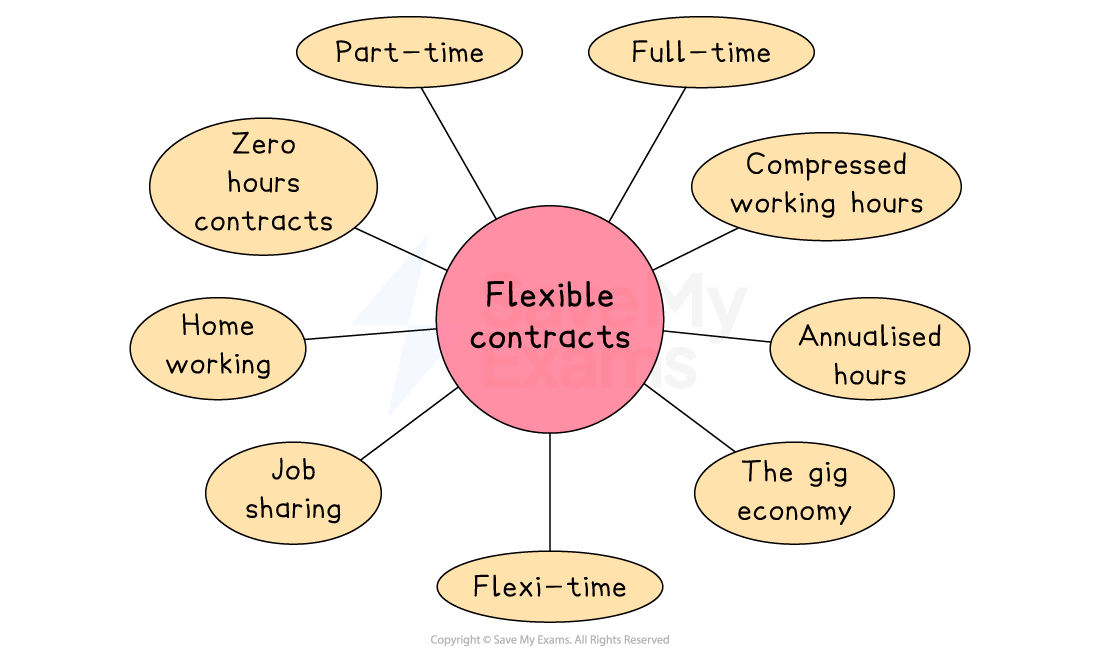
Full-time contracts
-
A full-time employment contract requires the employee to work the number of hours per week set by the company
-
In the UK, full-time employees are classified as those who work 35 hours a week or more
-
At Save My Exams, a full-time employee works 40 hours each week
-
|
Advantages |
Disadvantages |
|---|---|
|
|
Part-time contracts
-
Employees who work part-time may only work two or three days a week
-
Part-time employment may be more flexible and can be adjusted subject to employee availability and employer requirements
-
Part-time employees at the US company Costco work between 24 and 40 hours per week
-
-
|
Advantages |
Disadvantages |
|---|---|
|
|
Annualised hours
-
An annualised hours contract sets the employee’s working time as a total number of hours to be completed over the whole year, rather than a fixed number each week
-
Wages are usually spread evenly, so employees receive the same salary each month even though weekly hours may rise or fall
-
|
Advantages |
Disadvantages |
|---|---|
|
|
Compressed working hours
-
A compressed hours arrangement means an employee works their normal total hours for a period, but squeezes them into fewer, longer working days
-
E.g. Government offices in Australia allow staff to compress fortnightly hours into eight longer days, freeing every ninth and tenth day
-
|
Advantages |
Disadvantages |
|---|---|
|
|
Shift working
-
This involves working different periods at different times, usually on a rota
-
It usually refers to anything outside of the standard Monday-Friday working week
-
Some warehouse employees might need to work an early shift to ensure deliveries are ready to go
-
In many care homes, night shifts are a regular part of the job
-
|
Advantages |
Disadvantages |
|---|---|
|
|
Flexi-time
-
Flexi-time allow employees to schedule working hours around their individual needs and accommodate their commitments outside of work
-
It usually involves working some set hours, with the remainder of hours organised according to the employees’ needs
-
E.g. An employee may be expected to be at work between the hours of 10am and 2pm, but can choose when they complete the rest of their working hours
-
|
Advantages |
Disadvantages |
|---|---|
|
|
Home working
-
Advances in communication technology have enabled a larger proportion of workers than ever before to work from home
-
Employees use tools such as email, instant messaging, collaborative software, scheduling apps and videoconferencing to carry out work remotely
-
|
Advantages |
Disadvantages |
|---|---|
|
|
Job sharing
-
Job sharing is where two or more employees divide a job between them to cover one full-time role
-
Pay, benefits and leave entitlement for job sharing are allocated on a proportional basis
-
|
Advantages |
Disadvantages |
|---|---|
|
|
Zero hours contracts
-
This is where an employee agrees to be available for work as and when required, with no particular number of hours or times of work specified
-
In the UK, zero-hour contracts are controversial
-
Trade unions and the media have accused businesses, such as Sports Direct, of using them to exploit workers
-
In 2015, UK employers were banned from offering zero-hour contracts that prevented employees from working for another employer at the same time
-
-
|
Advantages |
Disadvantages |
|---|---|
|
|
The gig economy
-
This is where people earn money by completing short, on-demand tasks instead of holding traditional, permanent jobs
-
E.g. In India and Southeast Asia the rapid expansion of ride-hailing and food-delivery apps such as Gojek and Swiggy has created many jobs in the gig economy
-
|
Advantages |
Disadvantages |
|---|---|
|
|
Management by Objectives (MBO)
-
Management by objectives involves managers and employees jointly setting clear, measurable goals that link each job to the organisation’s overall aims
-
Performance is then judged on the results achieved
-
How MBO is implemented
-
Set organisational goals
-
Senior management define a set of strategic targets
-
-
Cascade and agree individual objectives
-
Each manager works with team members to translate these targets into personal SMART goals
-
-
Action plans, monitoring and feedback
-
Resources and deadlines are agreed, progress is tracked, and regular check-ins provide guidance
-
-
Appraisal and reward
-
At the review stage, achievement of the agreed objectives informs performance ratings, pay rises and further development plans
-
Usefulness of MBO to a business
-
Focus and alignment
-
Everyone understands exactly what is expected and how their work supports corporate goals, reducing wasted effort
-
-
Motivation and engagement
-
Because employees help set their own targets, they feel ownership, leading to higher commitment, better communication and stronger job satisfaction
-
-
Fair, data-based management
-
Clear, quantifiable objectives give managers unbiased criteria for appraisal, feedback and rewards, cutting disputes and making decisions more transparent
-
-
Broader benefits
-
Goal-setting encourages forward planning, highlights training needs, and can improve overall company performance by linking day-to-day tasks to long-term strategy
-