
Business_A-level_Cie
-
business-and-its-environment
enterprise6 主题 -
business-structure6 主题
-
size-of-business3 主题
-
business-objectives3 主题
-
stakeholders-in-a-business2 主题
-
external-influences-on-business12 主题
-
political-influences
-
legal-influences
-
economic-influences
-
economic-government-macroeconomic-objectives
-
economic-government-policies
-
social-influences
-
the-impact-of-corporate-social-responsibility
-
demographic-influences
-
technology-competitors-and-suppliers
-
international-trade
-
the-impact-of-multinationals
-
environmental-influences
-
political-influences
-
business-strategy10 主题
-
human-resource-managementhuman-resource-management-hrm8 主题
-
motivation4 主题
-
management2 主题
-
organisational-structure5 主题
-
business-communication5 主题
-
leadership2 主题
-
human-resource-strategy3 主题
-
marketingthe-nature-of-marketing7 主题
-
market-research3 主题
-
the-marketing-mix6 主题
-
marketing-analysis5 主题
-
marketing-strategy3 主题
-
operations-managementthe-nature-of-operations3 主题
-
inventory-management2 主题
-
capacity-utilisation-and-outsourcing1 主题
-
location-and-scale2 主题
-
quality-management1 主题
-
operations-strategy4 主题
-
finance-and-accountingbusiness-finance2 主题
-
sources-of-finance3 主题
-
forecasting-and-managing-cash-flows1 主题
-
costs4 主题
-
budgets1 主题
-
financial-statements4 主题
-
analysing-published-accounts6 主题
-
investment-appraisal2 主题
methods-of-communication
Spoken communication
-
Spoken communication is the process of sharing information using the voice
-
It includes both formal and informal conversations and can happen face-to-face or through devices such as phones or video calls
-
It is often supported by body language, tone, and gestures, which help convey meaning
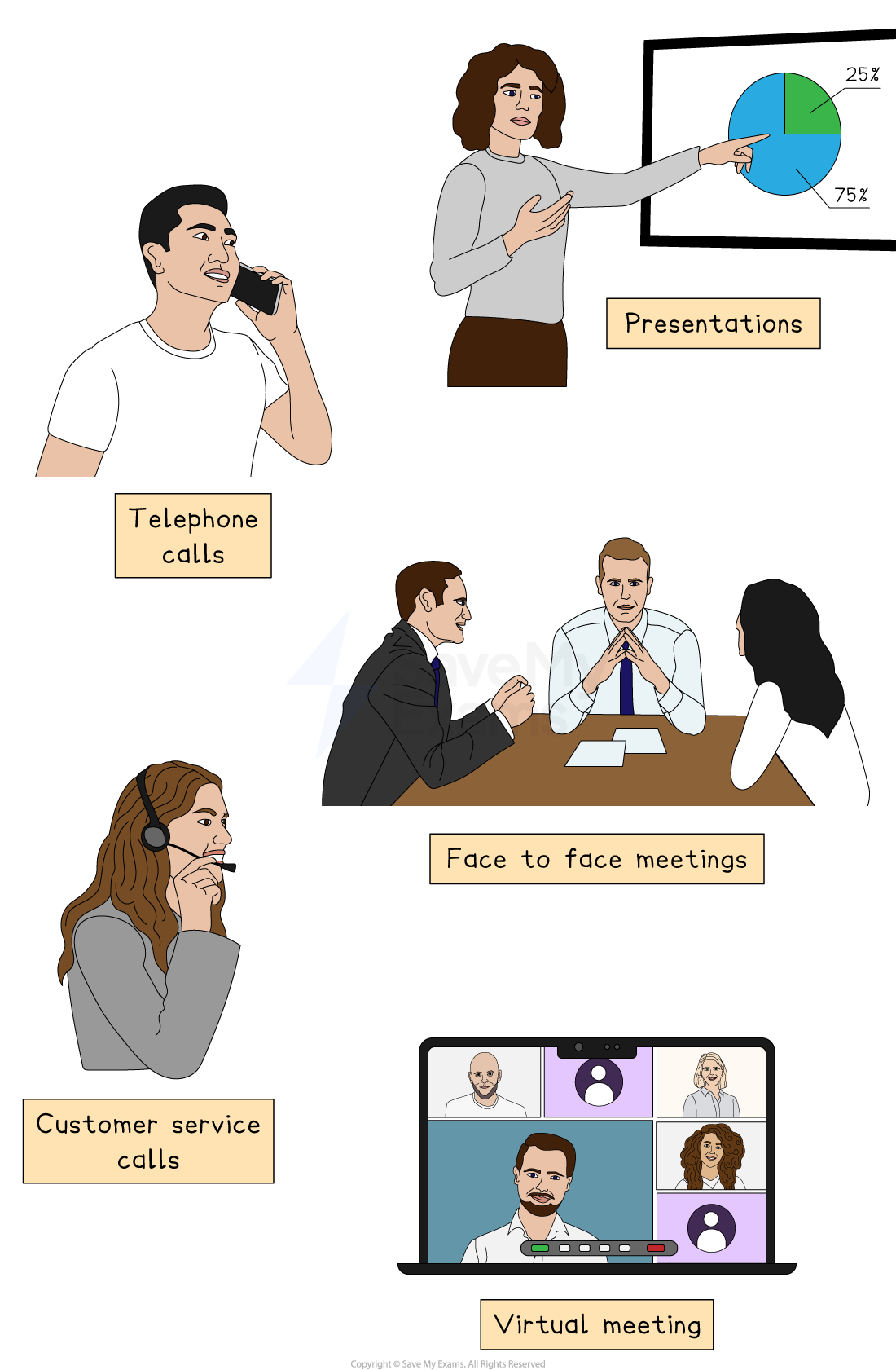
Examples of spoken communication in a business
-
Team meetings
-
Employees and managers discuss progress or upcoming projects
-
-
Telephone calls
-
Used to speak with customers, suppliers or colleagues
-
-
Presentations
-
A manager explains a new strategy to staff, often using software to share images, graphs and illustrations
-
-
Video conferences
-
Staff from different locations join a virtual meeting
-
-
Informal chats
-
Quick updates or feedback shared between co-workers during the working day
-
-
Customer service calls
-
Staff answering customer questions or solving problems
-
Strengths and weaknesses of spoken communication
|
Strengths |
Weaknesses |
|---|---|
|
|
|
|
|
|
|
|
|
|
Written communication
-
Written communication is the sharing of information through written words, either on paper or digitally
-
It includes anything that can be read, such as emails, reports, letters, notices, or messages sent through digital apps
-
Written communication is often used when the message needs to be clear, permanent, or shared with several people
Examples of written communication
-
Emails
-
May be used for daily updates, requests or instructions between employees and managers
-
-
Business reports
-
These are usually formal documents outlining results, plans or research
-
-
Notices and memos
-
These can be used for internal announcements about meetings, policy changes or deadlines
-
-
Agendas and minutes of meetings
-
These record what will be or has been discussed in face-to-face or virtual meetings
-
-
Letters
-
These may be used for formal communication with external stakeholders such as customers, suppliers or job applicants
-
-
Contracts and agreements
-
These are legal documents confirming terms and conditions
-
Strengths and weaknesses of written communication
|
Strengths |
Weaknesses |
|---|---|
|
|
|
|
|
|
|
|
|
|
Electronic communication
-
Electronic communication is the use of digital technology to send and receive messages
-
It includes written, spoken, or visual communication shared using electronic devices such as computers, smartphones or tablets
-
It allows quick and efficient contact within and outside the business, across any location or time zone
Examples of electronic communication
-
Emails:
-
Fast written messages that can be sent to individuals or groups
-
-
Video calls (e.g. Zoom, Microsoft Teams)
-
Real-time spoken and visual meetings
-
-
Instant messaging apps (e.g. Slack, WhatsApp)
-
Quick, informal messages between staff
-
-
Company websites
-
These are used to provide information to customers, investors and the general public
-
-
Social media (e.g. LinkedIn, Instagram)
-
This can be used to promote the business and interact with external audiences
-
-
Internal platforms
-
These include intranets that can be used to share updates, documents and announcements with employees
-
Strengths and weaknesses of electronic communication
|
Strengths |
Weaknesses |
|---|---|
|
|
|
|
|
|
|
|
|
|
Visual communication
-
Visual communication is the use of images, symbols, charts or other visual elements to convey information
-
It helps to simplify complex ideas and make messages easier to understand and remember
-
Visuals are often used alongside spoken or written communication to strengthen the message
Examples of visual communication
-
Graphs, charts and infographics
-
These are often used in reports or presentations to show trends, sales data or performance
-
-
Logos and branding
-
These provide a visual identity of the business that creates instant recognition
-
-
Training videos or animations
-
These can help employees understand how to use equipment or follow procedures
-
-
Presentations (e.g. PowerPoint)
-
Software used in meetings or pitches to illustrate key points
-
-
Signs and symbols
-
These can include health and safety signs, arrows or labels around the workplace, providing instructions or information
-
Strengths and weaknesses of visual communication
|
Strengths |
Weaknesses |
|---|---|
|
|
|
|
|
|
|
|