
Biology_A-level_Cie
-
1-1-the-microscope-in-cell-studies5 主题
-
1-2-cells-as-the-basic-units-of-living-organisms5 主题
-
2-1-testing-for-biological-molecules3 主题
-
2-2-carbohydrates-and-lipids8 主题
-
2-3-proteins6 主题
-
2-4-water2 主题
-
3-1-mode-of-action-of-enzymes5 主题
-
3-2-factors-that-affect-enzyme-action8 主题
-
4-1-fluid-mosaic-membranes4 主题
-
4-2-movement-into-and-out-of-cells12 主题
-
diffusion
-
osmosis
-
active-transport
-
endocytosis-and-exocytosis
-
investigating-transport-processes-in-plants
-
investigating-diffusion
-
surface-area-to-volume-ratios
-
investigating-surface-area
-
estimating-water-potential-in-plants
-
osmosis-in-plant-cells
-
osmosis-in-animals
-
comparing-osmosis-in-plants-and-animals
-
diffusion
-
5-1-replication-and-division-of-nuclei-and-cells6 主题
-
5-2-chromosome-behaviour-in-mitosis2 主题
-
6-1-structure-of-nucleic-acids-and-replication-of-dna4 主题
-
6-2-protein-synthesis5 主题
-
7-1-structure-of-transport-tissues4 主题
-
7-2-transport-mechanisms7 主题
-
8-1-the-circulatory-system7 主题
-
8-2-transport-of-oxygen-and-carbon-dioxide5 主题
-
8-3-the-heart4 主题
-
9-1-the-gas-exchange-system6 主题
-
10-1-infectious-diseases3 主题
-
10-2-antibiotics3 主题
-
11-1-the-immune-system4 主题
-
11-2-antibodies-and-vaccination6 主题
-
12-1-energy5 主题
-
12-2-respiration11 主题
-
aerobic-respiration-the-krebs-cycle
-
aerobic-respiration-role-of-nad-and-fad
-
aerobic-respiration-oxidative-phosphorylation
-
anaerobic-respiration
-
energy-yield-aerobic-and-anaerobic-respiration
-
anaerobic-adaptation-of-rice
-
aerobic-respiration-effect-of-temperature-and-substrate-concentration
-
structure-and-function-of-mitochondria
-
the-four-stages-in-aerobic-respiration
-
aerobic-respiration-glycolysis
-
aerobic-respiration-the-link-reaction
-
aerobic-respiration-the-krebs-cycle
-
13-1-photosynthesis-as-an-energy-transfer-process8 主题
-
13-2-investigation-of-limiting-factors2 主题
-
14-1-homeostasis-in-mammals8 主题
-
14-2-homeostasis-in-plants3 主题
-
15-1-control-and-coordination-in-mammals12 主题
-
the-endocrine-system
-
the-nervous-system
-
neurones
-
sensory-receptor-cells
-
sequence-of-events-resulting-in-an-action-potential
-
transmission-of-nerve-impulses
-
speed-of-conduction-of-impulses
-
the-refractory-period
-
cholinergic-synapses
-
stimulating-contraction-in-striated-muscle
-
ultrastructure-of-striated-muscle
-
sliding-filament-model-of-muscular-contraction
-
the-endocrine-system
-
15-2-control-and-coordination-in-plants3 主题
-
16-1-passage-of-information-from-parents-to-offspring5 主题
-
16-2-the-roles-of-genes-in-determining-the-phenotype7 主题
-
16-3-gene-control3 主题
-
17-1-variation4 主题
-
17-2-natural-and-artificial-selection7 主题
-
17-3-evolution2 主题
-
18-1-classification5 主题
-
18-2-biodiversity7 主题
-
18-3-conservation6 主题
-
19-1-principles-of-genetic-technology11 主题
-
19-2-genetic-technology-applied-to-medicine4 主题
-
19-3-genetically-modified-organisms-in-agriculture2 主题
-
1-1-the-microscope-in-cell-studies
-
1-2-cells-as-the-basic-units-of-living-organisms
-
2-1-testing-for-biological-molecules
-
2-2-carbohydrates-and-lipids
-
2-3-proteins
-
2-4-water
-
3-1-mode-of-action-of-enzymes
-
3-2-factors-that-affect-enzyme-action
-
4-1-fluid-mosaic-membranes
-
4-2-movement-into-and-out-of-cells
-
5-1-replication-and-division-of-nuclei-and-cells
-
5-2-chromosome-behaviour-in-mitosis
-
6-1-structure-of-nucleic-acids-and-replication-of-dna
-
6-2-protein-synthesis
-
7-1-structure-of-transport-tissues
-
7-2-transport-mechanisms
-
8-1-the-circulatory-system
-
8-2-transport-of-oxygen-and-carbon-dioxide
-
8-3-the-heart
-
9-1-the-gas-exchange-system
-
10-1-infectious-diseases
-
10-2-antibiotics
-
11-1-the-immune-system
-
11-2-antibodies-and-vaccination
distribution-of-tissues
Distribution of tissues in the gas exchange system
Cartilage
-
Cartilage is a strong and flexible tissue found in various places around the body
-
Cartilage forms ‘c’ shaped rings that are arranged along the trachea, called tracheal rings
-
These rings help to support the trachea and ensure it stays open, while allowing it to move and flex while we breathe
-
-
Cartilage also supports the bronchi, though it does not form c-shaped rings here
-
Cartilage is not found in the bronchioles
-
Ciliated epithelium
-
Ciliated epithelium is a specialised tissue which lines all of the tubes of the airways
-
Each cell has small projections of cilia
-
The cilia sweep mucus, dust and bacteria upwards and away from the lungs and the epithelium itself
-
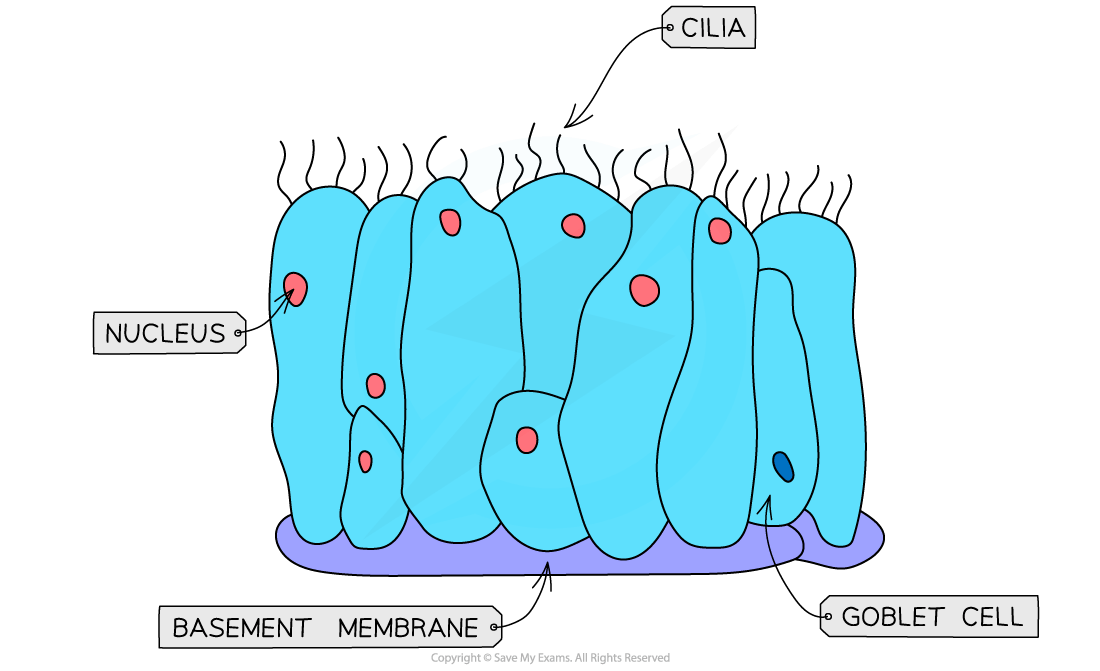
Goblet cells
-
Goblet cells can be found scattered throughout the ciliated epithelium in the trachea, and also in the bronchi, though usually not in the bronchioles
-
They are mucus-producing cells that secrete viscous mucus
-
This mucus traps dust, bacteria and other microorganisms and prevents them from reaching the lungs
-
The mucus is then swept along by the cilia of the ciliated epithelium upwards and is swallowed
-
The mucus and any microorganisms will then be destroyed by the acid in the stomach
-
Squamous epithelium of alveoli
-
The alveoli have a lining of thin squamous epithelium, that allows for gas exchange
-
The squamous epithelium forms the structure of the alveolar wall and is very thin and permeable for the easy diffusion of gases
-
Smooth muscle
-
Smooth muscle can be found in the walls of the trachea, bronchi and bronchioles
-
It helps to regulate the flow of air into the lungs by relaxing when more air is needed and constricting when less air is needed
-
Capillaries
-
Each alveolus is surrounded by an extensive network of capillaries
-
Carbon dioxide diffuses out of the capillaries and into the alveoli to be exhaled, while oxygen diffuses the other way from alveoli and into the capillaries to be carried around the body
-
These capillaries have a diameter of around 3-4 µm, which is only wide enough for one red blood cell to travel through at any one time
-
This ensures that there is sufficient time and opportunity for gas exchange to occur
-
-
Worked Example
Explain how the lining of the trachea, bronchus and bronchioles provide protection against pathogens
-
Cilia beat to move mucus away from the lungs and up towards the mouth
-
Mucus is produced by goblet cells and acts as a barrier to pathogens from entering the ciliated epithelium
-
The mucus also traps bacteria and microorganisms, while blood vessels bring macrophages to engulf any pathogens in phagocytosis